




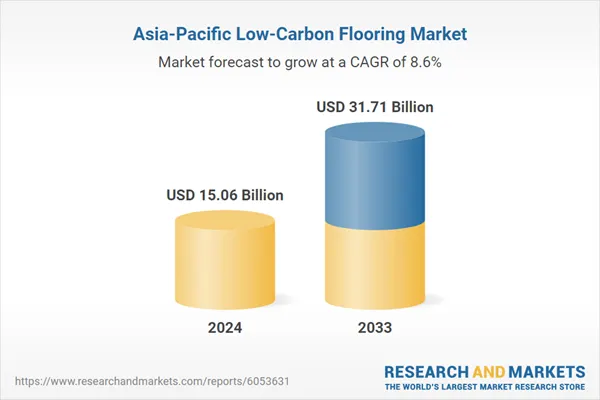
The Asia-Pacific low-carbon flooring market is poised for significant expansion, according to a new report released by ResearchAndMarkets.com. Valued at $15.06 billion in 2024, the market is projected to grow at a compound annual growth rate (CAGR) of 8.62%, reaching approximately $31.71 billion by 2033.
Driven by increasing government regulations promoting eco-friendly construction materials, and rising consumer awareness about environmental sustainability, low-carbon flooring is gaining rapid traction across residential, commercial, and industrial sectors.
As countries in the APAC region intensify their green building initiatives and seek to reduce carbon emissions, demand for sustainable flooring solutions has surged. Innovations in materials—such as natural fibers, bio-based products, and recycled content—are providing durable and cost-effective alternatives to traditional flooring.
The report highlights a growing integration of low-carbon flooring with smart home technologies, as well as a rise in certified green building projects aiming for standards like LEED and WELL. These certifications further boost the market’s momentum by encouraging builders and developers to meet environmental benchmarks.
“The low-carbon flooring market in APAC is at the heart of the region’s transition to greener, smarter urban spaces,” the report notes. “Technological advancements are enabling flooring solutions that combine high performance with low environmental impact, making them more accessible and attractive for a broad spectrum of consumers and businesses.”
Countries like China, Japan, South Korea, and Australia are at the forefront of this movement, leveraging both policy incentives and private sector innovation to shift towards climate-resilient infrastructure.
With sustainability becoming a core pillar of construction across the region, the Asia-Pacific low-carbon flooring market is expected to see multi-billion-dollar opportunities over the next decade. Industry players are advised to invest in R&D, smart materials integration, and certification alignment to stay competitive in this rapidly evolving market.

