




Innovation has become a decisive factor in maintaining competitiveness across global industries — and the carpet sector is no exception. While carpet manufacturing has deep cultural and historical roots, leading companies are now embracing modern technologies to meet global demand and ensure efficiency. Among these innovators is SAG Corporation, a major Uzbek manufacturer whose products are now present in 10 countries, including Armenia, Azerbaijan, Georgia, Kyrgyzstan, China, and the United States.
Said Khakimov, Director of Production, Marketing, and Sales at SAG, shared insights on how technological upgrades, automation, and sustainability initiatives are reshaping the company’s operations and driving its growth.
Automation, AI, and Digital Tools Reshape Production
Khakimov noted that although carpet weaving still carries cultural significance, the industry has undergone major technological shifts.
“Today, manual weaving exists but represents only a niche. Modern carpet production relies on computer modeling, digital printing, automation, and increasingly, AI,” he said.
SAG has invested heavily in new machinery — each modern machine costing around $0.5 million — but the returns have been significant.
According to Khakimov:
- The newest machines are 95% automated
- Human involvement in mechanical tasks has dropped to 5%
- Automated systems manage design creation, quality control, and error correction
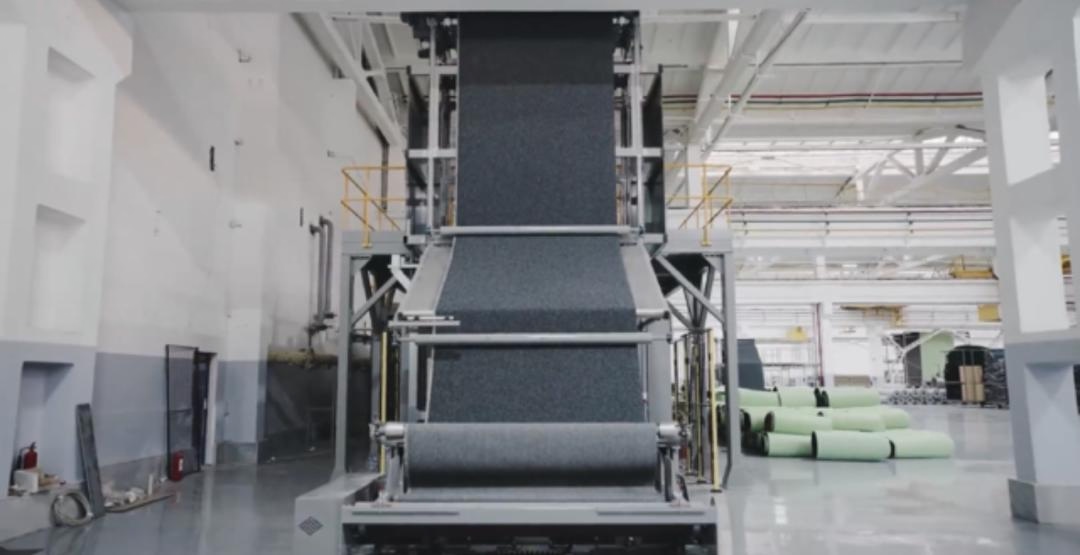
As a result, defective output has decreased, skilled labor shortages have become less critical, and energy consumption is falling. “If we replace all older machines with the latest ones, we expect to reduce electricity costs by 70% over five years,” he added.
Beyond production, SAG has digitalized business operations. The company adopted SAP ERP eight years ago and received a special SAP award in 2020 for leadership in digital transformation within the CIS region. Over the past three years, SAG has also integrated AI-based systems into order processing, shipment, and design creation.
Also Read: Uzbekistan’s Carpet Exports Reach $21.8 Million
Recycling PET Bottles Into Carpets: A Landmark Achievement
SAG became the first company in the region to recycle PET bottles into materials used for carpet production — a project that has grown far beyond its initial environmental motivation.
The enterprise now processes around 1 million plastic bottles per day, sourced from Uzbekistan and neighboring countries such as Tajikistan, Turkmenistan, and Kyrgyzstan. Recycled materials are converted into polyester flakes and used primarily for:
- Artificial turf backing
- Standard carpet backing
- Other industrial textile applications
Although recycled threads make up only 1–2% of each carpet, the company’s large-scale production ensures a significant overall impact.
Financially, switching to secondary plastic did not reduce raw material costs. “Our expenses increased,” Khakimov admitted. “But it was essential for us to move toward sustainable development.”
The shift ultimately brought strategic benefits: optimized supply chains, stronger brand image, and increased media visibility.
Rising Production Capacity and Growing Market Demand
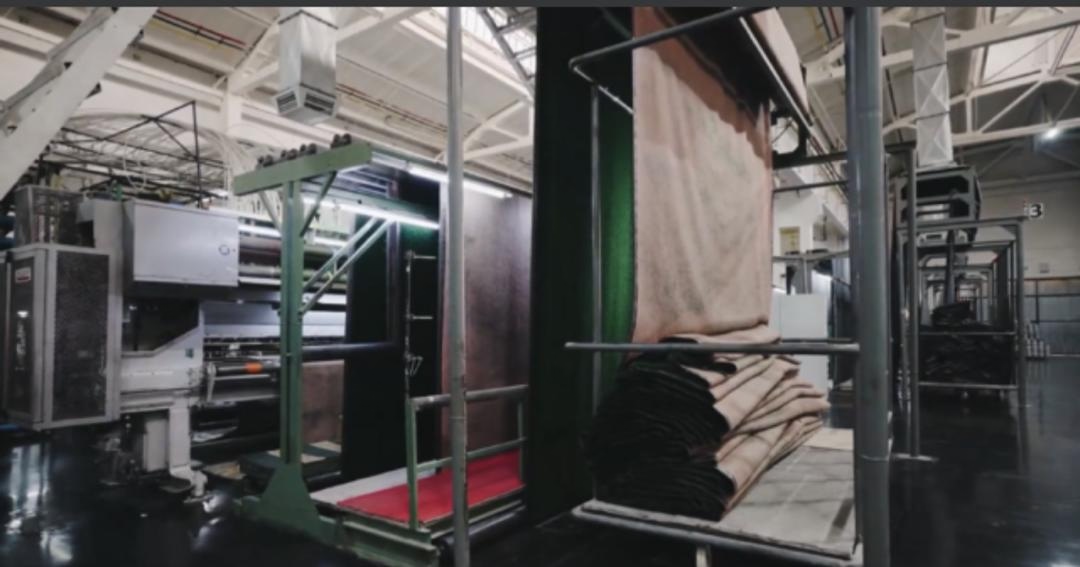
Technological investment has directly contributed to higher production outputs. SAG’s annual carpet production has increased from 12 million square meters in 2020 to 15 million square meters in 2024.
Despite economic uncertainties, market demand for carpets continues to rise. “People want warmer, cozier interiors,” Khakimov said. “Designers almost always include rugs because they complete the space.”
Today’s best-selling carpets feature:
- Calm, natural color palettes
- Modern, minimalist patterns
- Moroccan-style designs
- Natural materials such as cotton and wool
“These products create warmth and comfort that hard floors simply cannot,” he added.
A Future Built on Innovation and Sustainability
SAG’s experience highlights how traditional industries can thrive by integrating digital tools, automation, and sustainable practices. With continuous investment, rapidly growing production capacity, and persistent global demand, the company is positioning itself as one of Central Asia’s most technologically advanced carpet manufacturers.

