



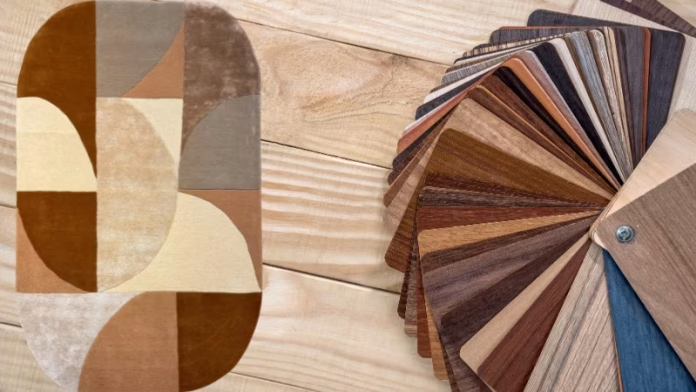
The global textile flooring market is projected to grow steadily in the coming years, reaching US$ 16.5 billion by 2033, up from an estimated US$ 11.1 billion in 2026, according to recent industry analysis. The sector is expected to expand at a compound annual growth rate (CAGR) of 5.8% between 2026 and 2033, driven by rising demand for sustainable flooring materials and expanding construction activity worldwide.
Growing urbanization, particularly in developing economies, along with increasing consumer interest in interior comfort and design aesthetics, continues to support the adoption of textile-based flooring solutions across residential and commercial sectors.
Sustainability and Construction Drive Market Growth
One of the strongest drivers shaping the textile flooring market is the increasing focus on sustainable and eco-friendly materials. Consumers and commercial buyers are increasingly seeking flooring options that combine durability, comfort, and lower environmental impact.
Manufacturers are responding by introducing products made from natural fibers such as wool, bamboo, coconut fibers, and organic cotton, alongside recyclable synthetic materials. Natural fiber carpets, especially wool and sisal, are gaining popularity due to their longevity and renewable characteristics.
Green building certifications such as LEED and BREEAM are also influencing purchasing decisions, encouraging the adoption of low-VOC, recyclable, and bio-based flooring solutions in commercial construction projects.
At the same time, rapid urbanization and infrastructure development across Asia-Pacific, India, and Africa are expanding demand for textile flooring products. Rising incomes in emerging markets are allowing consumers to upgrade from traditional hard flooring materials to carpets and textile surfaces that offer better acoustics and aesthetic appeal.

Tufted Carpets and Synthetic Fibers Dominate
Within the product segments, carpets remain the dominant category, accounting for approximately 60.7% of total market demand. Their widespread use in offices, hotels, retail spaces, educational institutions, and residential interiors continues to support this leading position.
Read more: Character and Flexibility: Redefining Tufted Carpets in Contemporary Interiors
Synthetic fibers such as nylon, polyester, and polypropylene represent the most widely used material category, holding roughly 37.2% market share. These materials are favored for their durability, stain resistance, and cost-effectiveness in high-traffic environments.
Among manufacturing technologies, tufted carpets are emerging as the fastest-growing segment, expected to expand at a CAGR of around 9.3% through 2034, driven by faster production cycles, cost efficiency, and flexible design capabilities.
Modular Carpet Solutions and Smart Flooring Emerging
The growing adoption of modular carpet tiles is creating new opportunities for flooring manufacturers. Commercial buyers increasingly prefer modular systems because they allow easy replacement of individual tiles, reducing maintenance costs and minimizing operational disruptions.
The shift toward flexible workspaces and hybrid office layouts is also encouraging demand for adaptable flooring systems that can accommodate changing interior designs.
At the same time, the industry is beginning to explore smart textile flooring technologies, including embedded sensors capable of monitoring foot traffic, supporting healthcare monitoring systems, or providing interactive experiences in retail environments.
Read more: Tarkett Introduces Quiet Edit: Modular Carpet Tile Collection
Advanced functional features such as antimicrobial coatings, improved acoustic insulation, and enhanced thermal performance are further expanding the application potential of textile flooring products.
Regional Market Trends
North America currently holds the largest share of the global textile flooring market, accounting for approximately 36.9% of total market value. The region benefits from strong manufacturing infrastructure, established distribution networks, and high consumer spending on interior furnishings.
Asia-Pacific, however, is emerging as the fastest-growing regional market, with growth projected at around 8.2% CAGR through 2033. Rapid urban development, government infrastructure investments, and expanding manufacturing capabilities are driving demand across the region.
China continues to play a dominant role in the industry, accounting for a major share of global textile flooring production due to its integrated supply chains and cost-competitive manufacturing base.
Competitive Landscape
The global textile flooring sector remains moderately consolidated, with major manufacturers including Mohawk Industries, Interface, Tarkett, Shaw Industries, Balta Group, Beaulieu International Group, and Forbo Holding competing across international markets.
Leading companies are focusing on sustainability innovation, digital design capabilities, product diversification, and strategic acquisitions to strengthen their market position. Emerging trends such as circular production systems, recyclable backing materials, and digital customization tools are expected to further reshape the industry in the coming years.
As global demand for sustainable interiors and smart building solutions continues to rise, textile flooring is positioned to remain a key segment within the broader flooring and interior design market.

