




Carpet design is often reduced to patterns, colors, or decorative appeal. In reality, it is a far more complex discipline—one that sits at the intersection of art, craftsmanship, market awareness, and cultural continuity.
Iranian carpet design offers a particularly strong example of this complexity. Rather than belonging to a single era or aesthetic, it represents a long, evolving design language shaped by centuries of visual culture, regional diversity, and human experience. For global audiences, Iranian carpet design is not only about tradition; it is about how tradition adapts, survives, and communicates in a changing world.
A Design Culture Rooted in Place, Not Trends
Unlike many modern design disciplines driven primarily by trends, Iranian carpet design has historically grown from place-based knowledge. Cities such as Kashan, Tabriz, Isfahan, Kerman, and Nain developed distinct visual identities influenced by architecture, nature, poetry, and local materials.
Designers working within these traditions were not merely decorators. They were visual storytellers, translating cultural values into structured compositions. Symmetry, rhythm, color harmony, and symbolic motifs were used deliberately, creating carpets that functioned as both utilitarian objects and cultural artifacts.
Figures such as Mohammad Ali Taghdisi Kashani, known for decades of work in classical Persian carpet design, exemplify this continuity. His designs reflect a deep understanding of proportion, balance, and classical Persian aesthetics—qualities that remain relevant well beyond Iran’s borders.
Also Read: The Impact of Iranian Carpet Designs and Colors on Mental Health and Well-Being
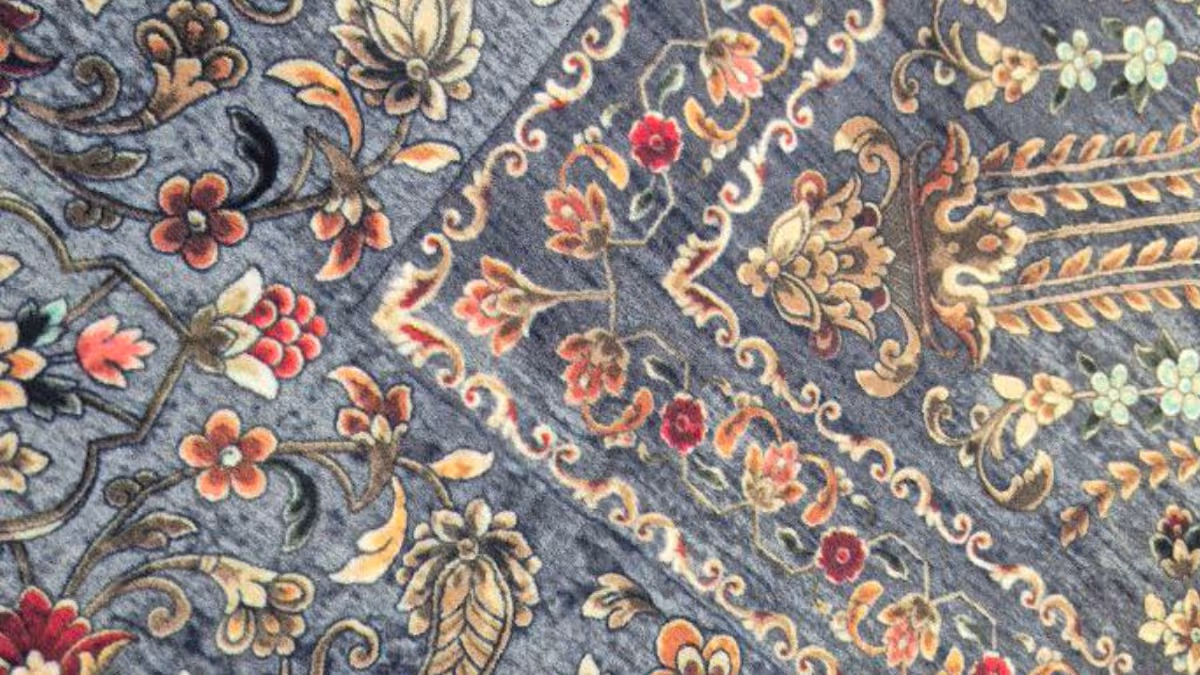
From Classical Masters to Modern Voices
Iranian carpet design has never been static. Over time, designers have responded to changes in materials, production methods, and global markets. In Tabriz, for example, innovation has often emerged within highly refined technical frameworks. Designers such as Mohammad Ali Gharabaghi are associated with extremely fine, museum-grade works that push technical and artistic limits while remaining grounded in tradition.
At the same time, contemporary Iranian designers are expanding the language of carpet design to address modern interiors, new lifestyles, and international audiences. Designers like Somayeh Mazrae and Sima Shirmohammadi represent a generation that works at the boundary between heritage and contemporary design. Their approach often involves simplifying compositions, rethinking color palettes, and adapting traditional motifs to modern production systems, including machine-made carpets.
This evolution demonstrates an important point for global readers: Iranian carpet design is not frozen in history. It is a living design culture capable of dialogue with contemporary markets.
Design Beyond the Carpet Itself
Another defining characteristic of Iranian carpet design is its strong connection to other creative disciplines. Architecture, miniature painting, calligraphy, and even garden design have historically influenced carpet compositions. Today, some designers extend this interdisciplinary approach further—exploring links between carpet design and fashion, textiles, interior design, and digital tools.
Designers such as Narges Heydari and Rezvan Sanati illustrate how contemporary Iranian design thinking moves fluidly between craftsmanship and modern design practice, without losing cultural depth.
Why Iranian Carpet Design Still Matters Globally
For international buyers, designers, and industry professionals, Iranian carpet design remains relevant for several reasons. First, it offers a rare example of long-term design continuity, where visual principles have evolved over centuries rather than decades. Second, it demonstrates how handcrafted aesthetics can coexist with modern production and global distribution. Finally, it provides a counterpoint to purely trend-driven design by emphasizing meaning, structure, and cultural memory.
Rather than being defined by a single “best” designer or style, Iranian carpet design is best understood as a collective design heritage—one shaped by masters of the past and reinterpreted by contemporary creators.
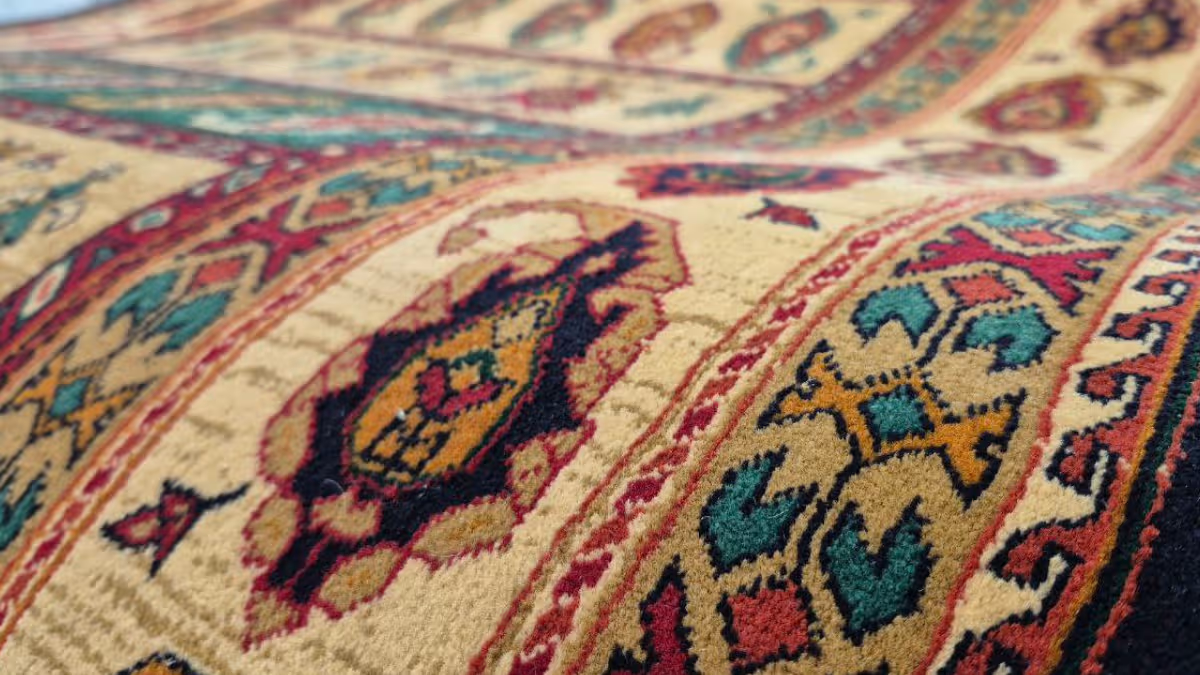
A Living Design Language
Iranian carpet design should not be viewed as a closed chapter of history. It is an ongoing conversation between generations, regions, and markets. From classical hand-knotted masterpieces to contemporary interpretations for modern interiors, this design culture continues to evolve—remaining both deeply rooted and globally communicative.
For global audiences, understanding Iranian carpet design is not about nostalgia. It is about recognizing how a mature design tradition adapts to the present while maintaining its identity—something increasingly rare in today’s fast-moving design landscape.

