



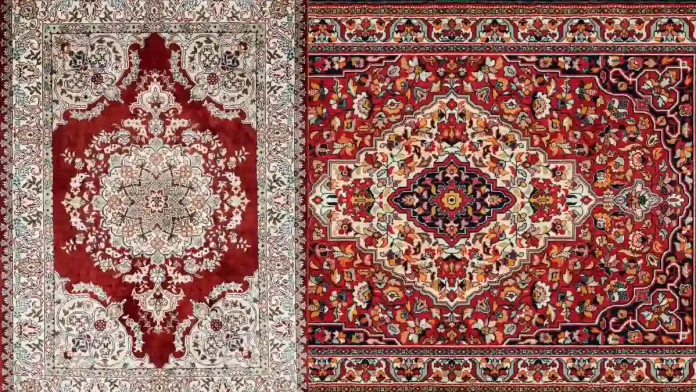
In a move to safeguard the interests of India’s traditional carpet industry, the Carpet Export Promotion Council (CEPC) has urged the Indian government to impose reciprocal tariffs on machine-made carpets imported from Turkiye, highlighting the growing disparity in bilateral trade and the need for fair competition.
A delegation led by CEPC Chairman Kuldeep R. Wattal, along with Director Sanjay Kumar Gupta, met Minister of State for Commerce Jitin Prasada in New Delhi on Wednesday. Bhadohi MP Vinod Bind was also present during the meeting, which covered a range of critical issues impacting the sector.
Gupta pointed out that Turkiye imposes a 46% import duty on Indian carpets, while India levies only a 20% duty on Turkish machine-made carpets, creating an uneven playing field. “We are seeing a rise in imports from Turkiye and a significant drop in our exports to their market. This demands urgent government intervention,” he said.
According to CEPC data, India’s carpet exports to Turkiye have declined from $17.08 million in 2015–16 to just $6.5 million in 2024–25 (till January). In contrast, imports from Turkiye rose from $4.2 million in 2015–16 to $13.97 million in 2022–23, underscoring a growing imbalance.
The council also highlighted concerns over U.S. tariffs imposed during the Trump administration on Indian handmade carpets, which have hurt global competitiveness. While carpet exports to the U.S. remain strong—accounting for over $1 billion annually since 2020–21—the council fears Turkiye and other rivals may gain a cost advantage due to lower U.S. tariffs.
CEPC also requested:
- Revival of the interest subvention scheme to support exporters.
- Reconsideration of Section 43B(H) of the Income Tax Act, which mandates MSME payments within 45 days—deemed impractical by exporters.
- Separate HS codes for handmade and machine-made carpets to improve international transparency and distinguish Indian craftsmanship.
Gupta emphasized that the carpet weaving industry supports thousands of artisans and farmers across India, with exports forming a vital part of rural livelihoods.
The CEPC delegation included senior members Ashfaque Ahmad Ansari, Umesh Shukla, Sattar Ansari, Aseem (Bobby) Ansari, Sadiq Ansari, and Shahid Ansari.
The council’s appeal comes at a critical time as Indian exporters face mounting global competition and seek stronger policy support to maintain their foothold in major markets.

