




Türkiye’s carpet industry continues to demonstrate resilience and strategic progress in global markets, achieving strong export performance while simultaneously investing in sustainability, innovation, and market diversification.
Türkiye’s Carpet Industry Maintains Strong Export Momentum While Advancing Sustainability and Market Diversification
According to recent industry insights shared by Zeynal Abidin Kaplan, Chairman of the Southeastern Anatolia Carpet Exporters’ Association (GAHİB), Turkish carpet exporters reached $2.016 billion in export value within the first nine months of 2025, supplying products to 175 countries and free zones worldwide. This performance reaffirms Türkiye’s position as one of the leading global players in carpet manufacturing and export.
Strong Export Performance Despite Global Challenges
Despite ongoing global economic uncertainties and competitive pressures, the Turkish carpet sector has successfully maintained its export strength. The industry exported over 404 million square meters of carpets, reflecting both production capacity and global demand stability.
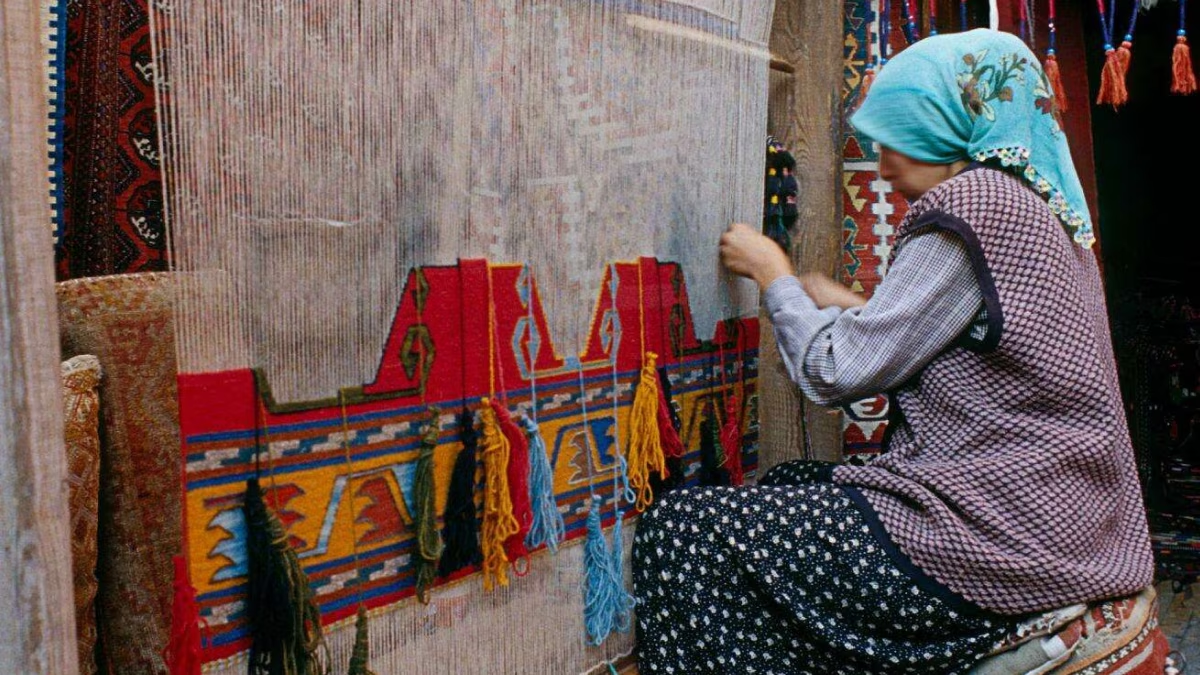
Machine-made carpets continue to dominate exports, generating the highest share of revenue, followed by tufted carpets, handmade carpets, and kilims. Notably, exports of handmade carpets recorded a significant increase of 37.1%, highlighting a growing appreciation for artisanal and high-value products in international markets.
Read more: Turkish Carpet Exporters Turn to Scandinavia for Strategic Market Expansion
The United States remains the largest export destination, followed by Saudi Arabia, Iraq, and the United Kingdom, indicating Türkiye’s strong presence across both established and emerging markets.
Strategic Focus on Market Diversification
One of the most notable aspects of the industry’s current strategy is its proactive approach to market diversification. Rather than relying heavily on traditional markets, Turkish exporters are expanding their reach to new regions including Asia-Pacific, Africa, and niche European markets.
Kaplan emphasized that trade delegations, international exhibitions, and targeted promotion activities have played a critical role in opening new markets. Countries such as Japan have seen significant export growth, while engagement with markets like Australia, Malaysia, Senegal, India, and Russia continues to strengthen Türkiye’s global footprint.
From an editorial perspective at MENA Covering, this diversification strategy is essential for reducing market dependency risks and ensuring long-term sustainability.
Sustainability and Value-Added Production Take Center Stage
Beyond export figures, the Turkish carpet industry is increasingly aligning itself with global sustainability trends. Industry leaders are placing greater emphasis on environmentally responsible production, innovative materials, and design-driven differentiation.
Kaplan highlighted that sustainability in production must go hand-in-hand with sustainable export growth. In a highly competitive global market, companies that invest in R&D, eco-friendly processes, and value-added products will be better positioned to maintain and expand their market share.

Additionally, initiatives such as design competitions and talent development programs are helping to integrate younger generations into the industry, fostering innovation and ensuring long-term competitiveness.
Gaziantep: The Global Hub of Carpet Production
Gaziantep continues to play a central role in Türkiye’s carpet industry, with its advanced manufacturing infrastructure and large-scale production capacity. The city is widely recognized as one of the world’s leading centers for machine-made carpet production.
With an annual production capacity reaching hundreds of millions of square meters, Gaziantep not only supports Türkiye’s export performance but also strengthens its position as a global production hub.
Industry representatives emphasize that maintaining this leadership will require continuous investment in technology, workforce development, and international branding.
Looking Ahead: Growth Through Collaboration and Innovation
The Turkish carpet sector’s future growth will depend on its ability to combine production strength with innovation, sustainability, and strategic partnerships.
Industry stakeholders underline that exhibitions such as ICFE Istanbul and international trade missions will continue to play a key role in strengthening global connections and unlocking new business opportunities.
As the global market evolves, Türkiye’s carpet industry is clearly shifting from a volume-driven model to a value-driven approach—focusing on quality, design, and long-term competitiveness.

