




How Anatolian Patterns Became a Universal Design Language
One of the most compelling reasons Turkish carpets have evolved into a globally recognized design category lies far beyond their craftsmanship or material quality. At the heart of their enduring appeal is a visual language—an intricate system of motifs that has carried stories, beliefs, and identity across centuries.
From Central Asia to Anatolia and onward to global markets, Turkish carpets and kilims have never been mere decorative objects. They are, in essence, woven narratives. Each motif, each symbol, and each color combination reflects layers of meaning shaped by nature, mythology, religion, and human experience. Today, as global consumers increasingly seek authenticity and storytelling in design, this symbolic richness is becoming one of the strongest competitive advantages of Turkish carpets in international markets.
For buyers, designers, and retailers across the MENA region and beyond, understanding these motifs is no longer optional—it is essential.
Carpet Weaving as a Cultural Archive
Carpet weaving is widely regarded as one of the oldest professions in Anatolia, deeply rooted in the traditions of the Turkic world. For centuries, it has served not only as a functional craft but also as a medium of cultural transmission.
Historically, carpets were woven primarily by women, often in domestic settings. These weavers did not rely on written language to express their thoughts, emotions, or beliefs. Instead, they translated their inner worlds into patterns. Every knot became a word; every motif, a sentence.
This is why Turkish carpets are often described as “silent storytellers.” They document life events, hopes, fears, and social values. They preserve oral culture in a visual format that can be understood across generations—even across borders.
In today’s context, this aspect positions Turkish carpets uniquely within the global interior design market. While many products compete on price or trend, Turkish carpets compete on meaning.
The Symbolism Behind Anatolian Motifs
Nature as the Primary Source of Inspiration
The earliest motifs found in Turkish carpets are deeply connected to nature. Plants, animals, mountains, and celestial elements form the foundation of many designs.
This connection reflects a worldview in which humans are not separate from nature but part of it. Motifs inspired by natural elements often symbolize harmony, balance, and continuity of life.
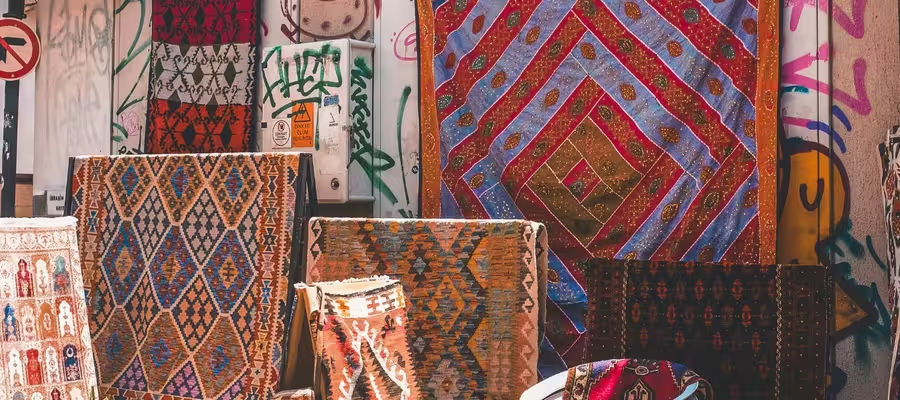
Floral patterns—such as tulips, roses, carnations, violets, and hyacinths—are among the most prominent. These are not merely decorative choices; they carry emotional and cultural connotations, often associated with beauty, love, and spirituality.
Over time, these motifs evolved from realistic depictions into stylized geometric forms, aligning with the broader aesthetic principles of Anatolian design.
The Tree of Life: A Universal Symbol Reimagined
Among all motifs, the Tree of Life stands out as one of the most powerful and widely recognized symbols in Turkish carpet art.
This motif represents the cycle of life—birth, growth, and return to nature. In Turkish belief systems, the tree is not just a plant but a living entity with a soul. It must be respected and protected, and its presence in carpets reflects a deep ecological awareness long before sustainability became a global trend.
The Tree of Life also symbolizes continuity across generations, making it particularly meaningful in family-oriented cultures across the MENA region.
For modern buyers, this motif aligns strongly with contemporary values such as sustainability, natural living, and cultural authenticity—making it highly marketable in premium segments.
The Star Motif: Guidance, Knowledge, and Hope
The star motif, commonly seen in Turkish carpets and kilims, carries a spiritual and philosophical dimension.
Traditionally, the star represents wisdom, knowledge, and divine guidance. It is also associated with hope, particularly in times of uncertainty. Just as stars guide travelers in the dark, this motif symbolizes direction and purpose in life.
Its widespread use across Central Asia and Anatolia highlights the interconnected cultural heritage of the region. Today, this shared symbolism resonates strongly with international audiences, especially in markets where spiritual and symbolic design elements are gaining popularity.
The Eagle and Bird Motifs: Power and Freedom
Animal motifs, particularly birds, play a significant role in Turkish carpet design. Among them, the double-headed eagle is especially noteworthy.
Originating from the Seljuk period, this symbol represents power, authority, and justice. It reflects the governance ideals of the time and continues to be associated with strength and sovereignty.
Other bird motifs, such as peacocks, symbolize beauty, pride, and elegance. Their long, colorful tails translate naturally into visually striking carpet designs, making them highly attractive in both traditional and contemporary interiors.
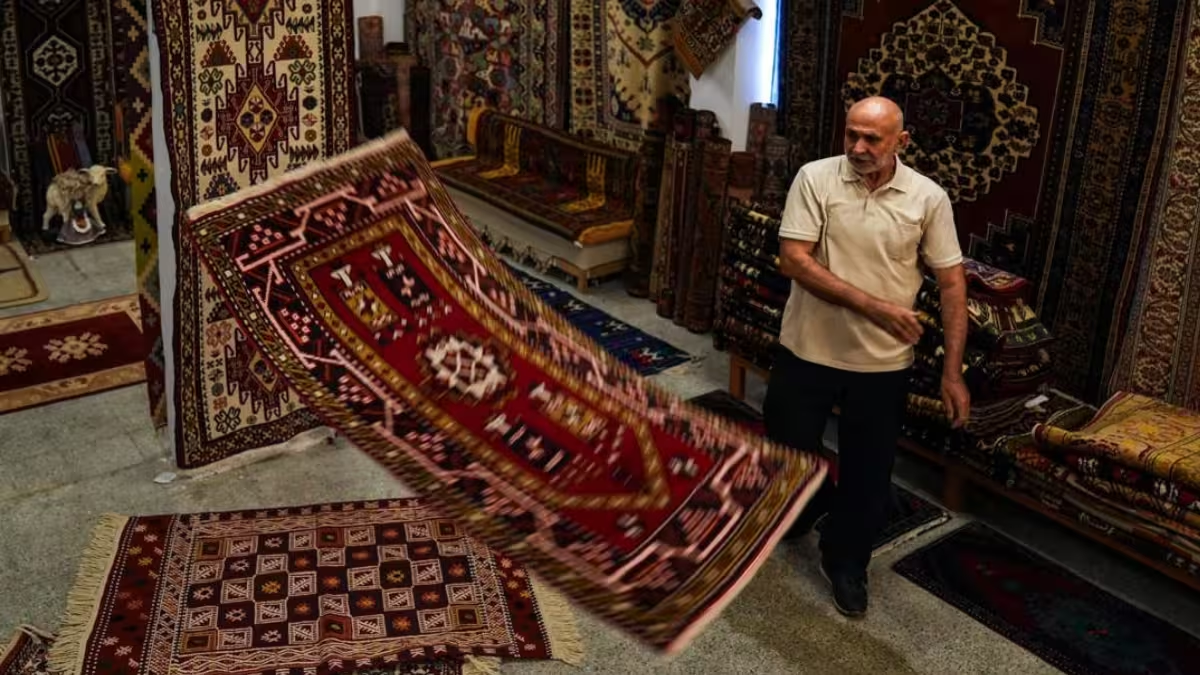
For international buyers, these motifs offer a unique blend of historical depth and aesthetic appeal—an ideal combination for storytelling-driven branding.
Feminine Motifs: Fertility, Life, and Abundance
Motifs representing femininity and motherhood hold a special place in Turkish carpet art. One of the most notable examples is the “hand-on-waist” motif, which symbolizes fertility, productivity, and abundance.
These motifs reflect the central role of women in both the creation of carpets and the continuation of cultural traditions. They also highlight the emotional dimension of weaving, where carpets become expressions of personal identity and social values.
In today’s market, where cultural narratives around gender and heritage are increasingly valued, these motifs offer an additional layer of meaning that can enhance product storytelling.
From Geometry to Meaning: The Evolution of Design
While many Turkish carpet motifs are rooted in symbolic meaning, they are often expressed through geometric forms. This abstraction serves multiple purposes.
Firstly, it aligns with traditional aesthetic principles that favor balance, symmetry, and repetition. Secondly, it allows motifs to be adapted across different regions and styles without losing their core meaning.
Read more: Talented Young Turkish Carpet Designers
Over centuries, these designs have evolved through various historical periods, including the Seljuk and Ottoman eras. Each period introduced new influences while preserving the underlying symbolic framework.
This ability to evolve without losing identity is one of the key reasons Turkish carpets have remained relevant in global markets.
The Global Appeal of Cultural Motifs
In recent years, the global interior design industry has undergone a significant shift. Consumers are no longer satisfied with purely aesthetic products; they are looking for items that tell a story.
Turkish carpets, with their rich symbolic language, are perfectly positioned to meet this demand.
For buyers in the MENA region, Europe, and beyond, these carpets offer:
- A connection to history and heritage
- A sense of authenticity and craftsmanship
- A narrative that can be communicated to end consumers
This is particularly important in high-end retail environments, where storytelling can significantly influence purchasing decisions.
A Strategic Opportunity for the Carpet Industry
For manufacturers, exporters, and retailers, the cultural dimension of Turkish carpets represents a powerful marketing tool.
However, this potential is often underutilized. Many products are still presented primarily in terms of size, material, and price—while their symbolic value remains unexplored.
To fully capitalize on this opportunity, industry players should:
- Integrate motif storytelling into product descriptions
- Educate buyers about the meaning behind designs
- Use digital platforms to highlight cultural narratives
Collaborate with designers to reinterpret traditional motifs for modern markets
By doing so, they can transform carpets from commodities into cultural assets.
Bridging Tradition and Innovation
The future of the Turkish carpet industry lies in its ability to balance tradition with innovation.
While preserving the authenticity of traditional motifs is essential, there is also a need to adapt these designs to contemporary tastes. This includes experimenting with new color palettes, materials, and production techniques—without compromising the underlying cultural narrative.
Digital technologies, including AI-driven design tools and advanced weaving machinery, are already playing a role in this transformation. They enable faster production and greater customization while maintaining high levels of precision.
For the MENA market, where both tradition and modernity coexist, this balance is particularly important.
Conclusion: More Than a Carpet
Turkish carpets are not just products—they are cultural expressions woven into form.
Their motifs speak a language that transcends borders, connecting people through shared human experiences. In an increasingly globalized world, this ability to communicate meaning is what sets them apart.
For industry professionals, understanding this language is not only a matter of appreciation but also a strategic necessity.
Because in today’s market, the most valuable products are not those that simply decorate a space—but those that tell a story.

