




By Behnam Ghasemi . Editor in chief at Kohan Textile Journal
For decades, the carpet industry followed a predictable production logic. Design was dictated by weaving structures, color was constrained by yarn systems, and innovation meant incremental mechanical upgrades. This model delivered scale and stability, but it also imposed rigidity—especially in a market that is now demanding speed, flexibility, and differentiation.
Today, that logic is no longer enough.
As hospitality projects become more design-driven, architects demand customization, and sustainability regulations tighten across Europe and beyond, the carpet industry is being pushed toward a structural shift. In this context, COLARIS is not emerging as a trend—it is emerging as a response.
[ez-toc]
The Structural Limits of Conventional Carpet Manufacturing
Traditional carpet production is deeply tied to loom configuration, yarn coloration, and jacquard programming. While this approach works efficiently for large, repetitive volumes, it creates clear limitations when the market moves toward customization and short production runs.
Every design change typically requires mechanical intervention, new yarn setups, sampling delays, and higher minimum quantities. The result is long lead times, increased costs, and reduced responsiveness—precisely the opposite of what today’s contract and hospitality markets demand.
Digital Thinking Finally Reaches Carpets
Digital printing transformed fashion, home textiles, ceramics, and wall coverings years ago. Carpets, however, remained one of the last sectors resistant to this shift, largely due to technical complexity. Thick piles, structured surfaces, durability requirements, and color fastness posed challenges that standard digital textile printers could not solve.
COLARIS addresses these challenges directly.
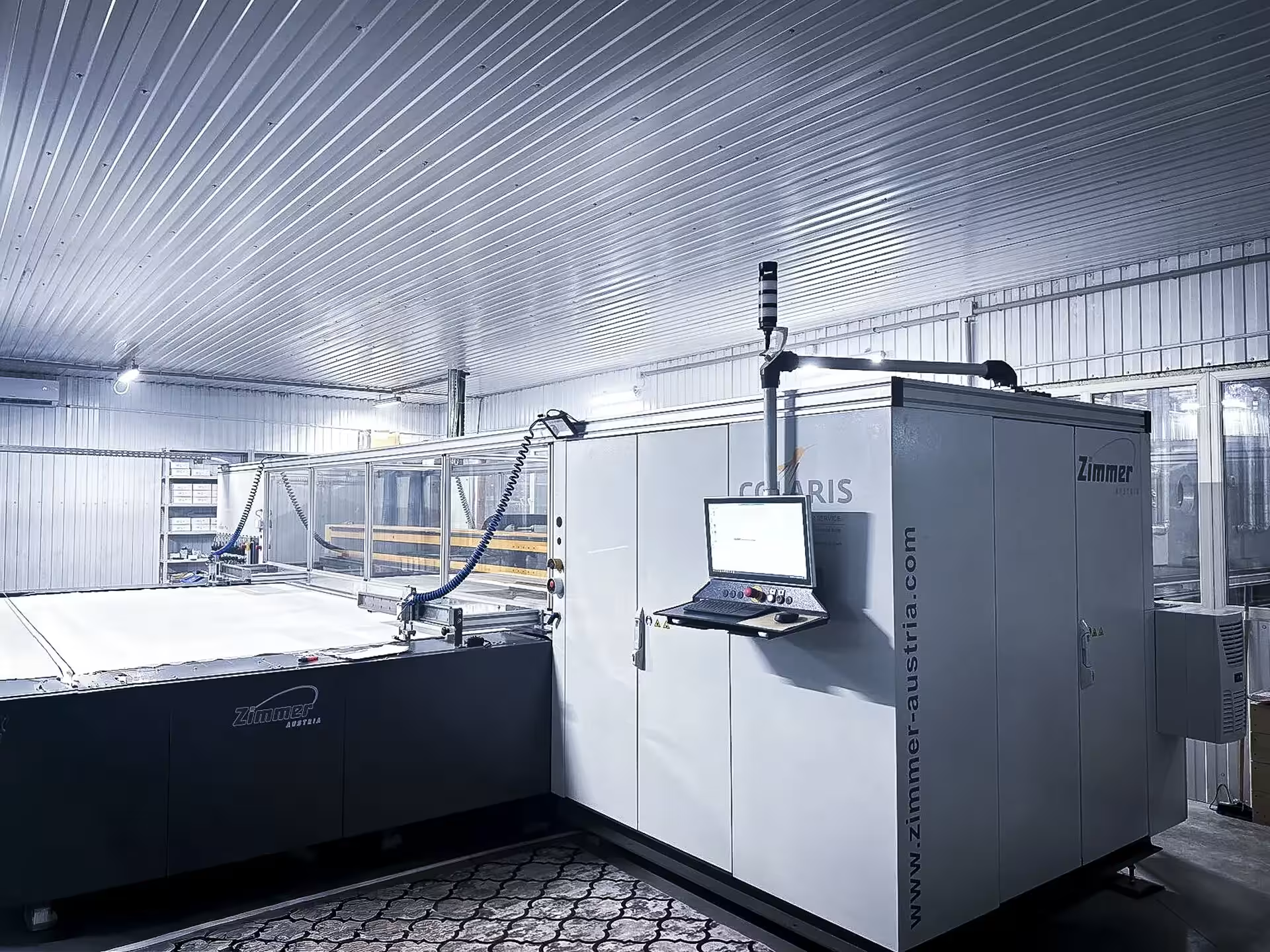
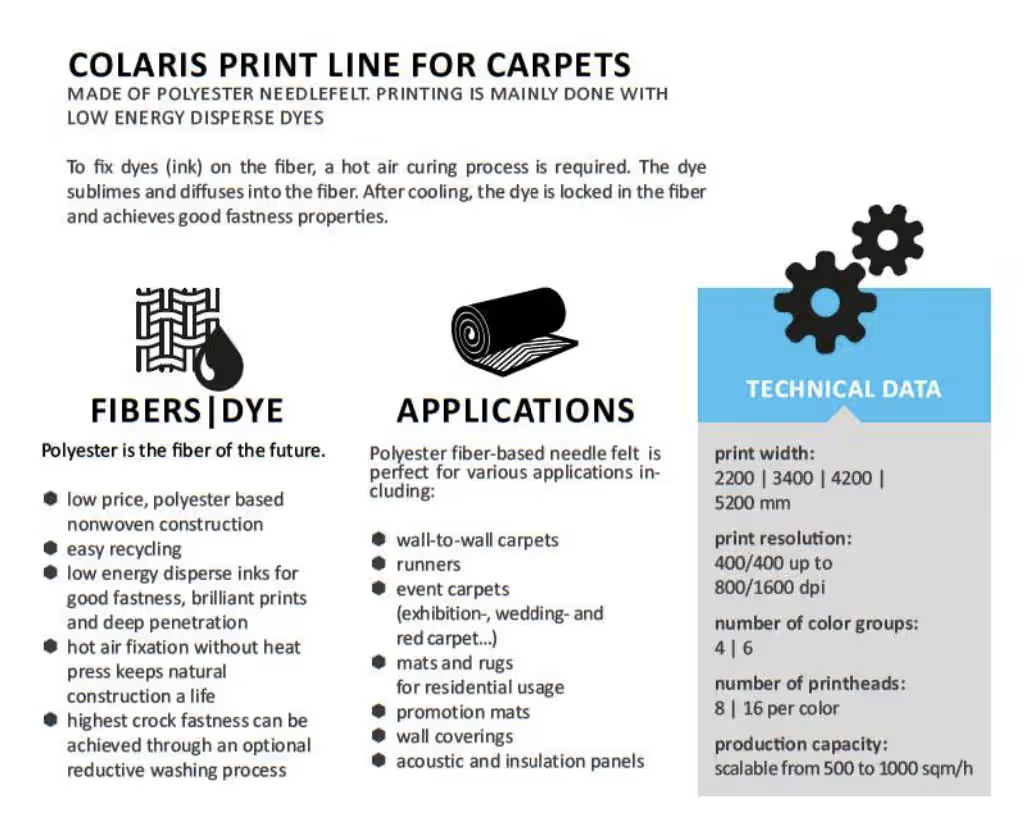
Designed specifically for floor coverings, the COLARIS system enables direct digital printing onto carpet surfaces, independent of weaving structure or yarn coloration. According to the technical documentation, COLARIS operates with printing resolutions of up to 400–600 dpi, delivering design precision previously unattainable in carpet production. Industrial production speeds of up to several hundred square meters per hour allow manufacturers to balance creativity with commercial viability.
What Makes COLARIS a True Breakthrough
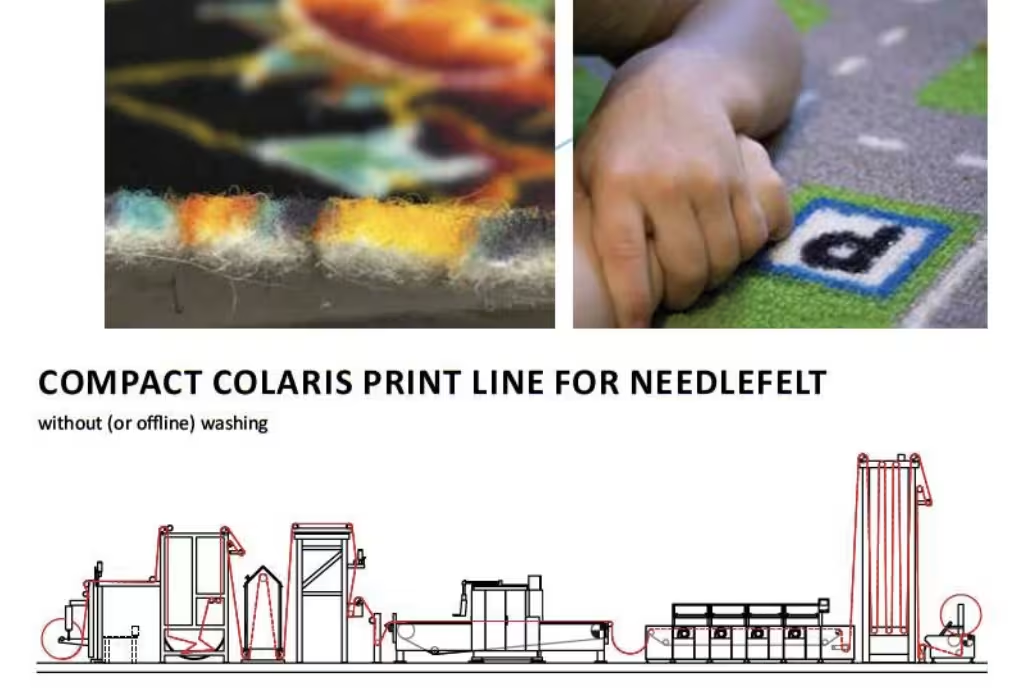
COLARIS is not a digital printer adapted for carpets—it is a system engineered for them. Its modular architecture integrates surface preparation, precise ink application, controlled fixation, and finishing processes into a single, coherent production logic.
This integration allows manufacturers to print on polyamide and polyester carpets, covering applications such as hospitality flooring, commercial carpets, rugs, mats, and carpet tiles. Importantly, design freedom is no longer limited by loom mechanics. Gradients, photographic motifs, and complex artistic effects become feasible without mechanical modification.
Also Read: Iran’s Machine-Made Carpet Exports Reach $227 Million in Nine Months
Key Capabilities That Change the Game
- Printing width scalable up to 5.0 meters, suitable for broadloom carpets
- High-definition digital resolution up to 600 dpi
- Compatibility with PA and PES fibers, including dense pile structures
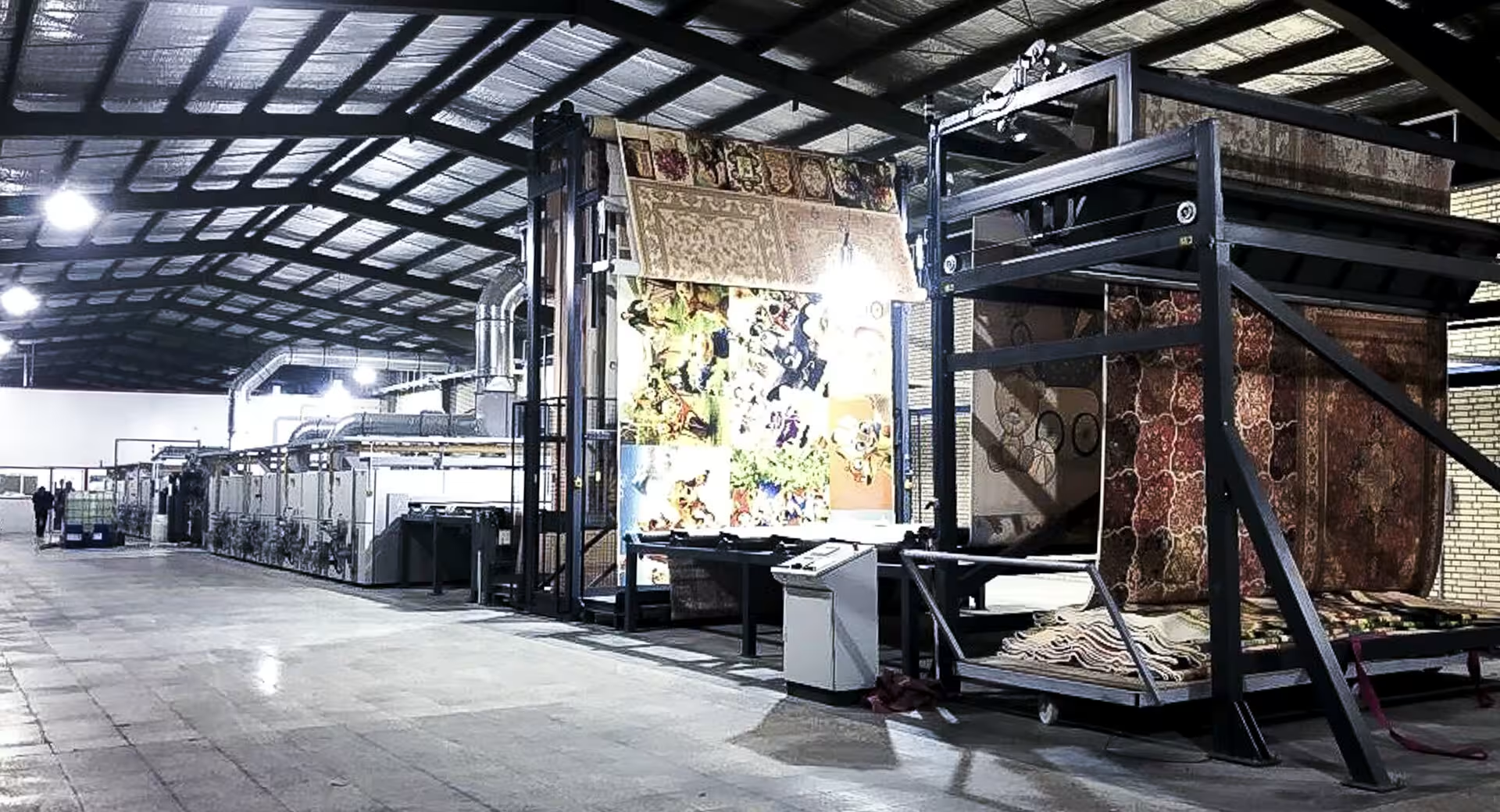
- Integration with steaming or thermofixation units for industrial durability
- Seamless alignment with coating, backing, and finishing lines
This combination shifts carpet production from rigid repetition to adaptive manufacturing.
Sustainability Moves from Claim to Process
Sustainability is no longer a marketing narrative in the carpet industry—it is a procurement requirement. Digital carpet printing with COLARIS delivers measurable environmental advantages by design.
Conventional carpet dyeing processes involve high water consumption, extensive chemical usage, and significant overproduction risk. COLARIS enables on-demand production, reducing water usage dramatically while minimizing chemical waste and unsold inventory. By producing only what is needed, when it is needed, manufacturers lower both environmental impact and financial exposure.
For export-oriented producers serving European and institutional markets, this shift is becoming a strategic necessity rather than a choice.
How COLARIS Reshapes Business Models?
Perhaps the most profound impact of COLARIS is not technical but structural. In traditional carpet manufacturing, production capabilities dictate design. With digital carpet printing, this hierarchy is reversed.
Designers, architects, and project planners regain control. Manufacturers can serve:
- Hotel chains seeking unique identities
- Office and commercial projects requiring customization
- Limited collections and exclusive design concepts
Carpets evolve from standardized commodities into active design elements, integrated into architectural storytelling and brand differentiation.
A Necessary Reality Check
COLARIS is not designed for ultra-low-cost mass production, nor does it aim to replace traditional weaving technologies. Instead, it introduces a hybrid production layer, ideal for high-value, design-driven applications.
The future of carpet manufacturing will not be digital or traditional. It will be strategically hybrid, combining scale efficiency with digital flexibility.

ZIMMER AUSTRIA: Why Integration Matters
Behind COLARIS stands ZIMMER AUSTRIA, a company with decades of expertise in digital printing, coating systems, and thermal processing. This matters because digital carpet printing only succeeds when ink chemistry, fiber behavior, software, mechanics, and fixation processes are perfectly aligned.
COLARIS works not because it prints—but because it integrates.
Why the Industry Is Embracing COLARIS
The carpet industry is pragmatic, cautious, and cost-aware. When it embraces a technology, it does so because the numbers make sense.
Colaris represents a shift:
- From rigidity to flexibility
- From long cycles to rapid response
- From repetition to design intelligence
- From overproduction to sustainability by process
It is not just a machine.
It is a change in mindset—from production-first to market-first thinking.
And that is why the carpet industry is falling in love with COLARIS.
Your turn: What do you think?
Is digital carpet printing a niche solution—or the foundation of the industry’s next chapter?
Share your view with kohan textile journal in the comments.
Download the technical brocuhre from HERE

