When evaluating the quality, craftsmanship, and structural value of machine-woven rugs, technical specifications tell the true story. Among these metrics, “reeds” (often referred to “density”) stand as the most critical features defining a carpet’s texture, clarity, and overall durability.
For modern flooring professionals and buyers in the MENA region, understanding how to verify these specifications is essential to ensuring quality.
What Does “Reed” Mean in Machine-Woven Rugs?
Technically, the reed number refers to the number of knots (or warp threads) in exactly one meter of the carpet’s width. It represents the horizontal compactness of the weave.
- Higher Reeds = Finer Details: A rug with a high reed count uses thinner, more delicate yarns packed tightly together. This allows the weaving loom to execute intricate, highly detailed patterns with the visual precision of fine hand-knotted rugs.
- The Technical Parameters: The structure of a premium rug is typically calculated using four core pillars: Reed, Density, Dimension, and Color.
Step-by-Step: How to Verify the Knots Yourself
You do not need to send a carpet to an expensive laboratory to verify its technical parameters. Because machine-woven manufacturing leaves an exact mathematical imprint on the textile back, you can verify the reed count manually using a standard ruler and a sharp eye.
1. Locate the Carpet Backing
Turn the rug over. The individual loops or “knots” are clearly visible and structurally grid-like on the back of the carpet.
2. Position Your Ruler
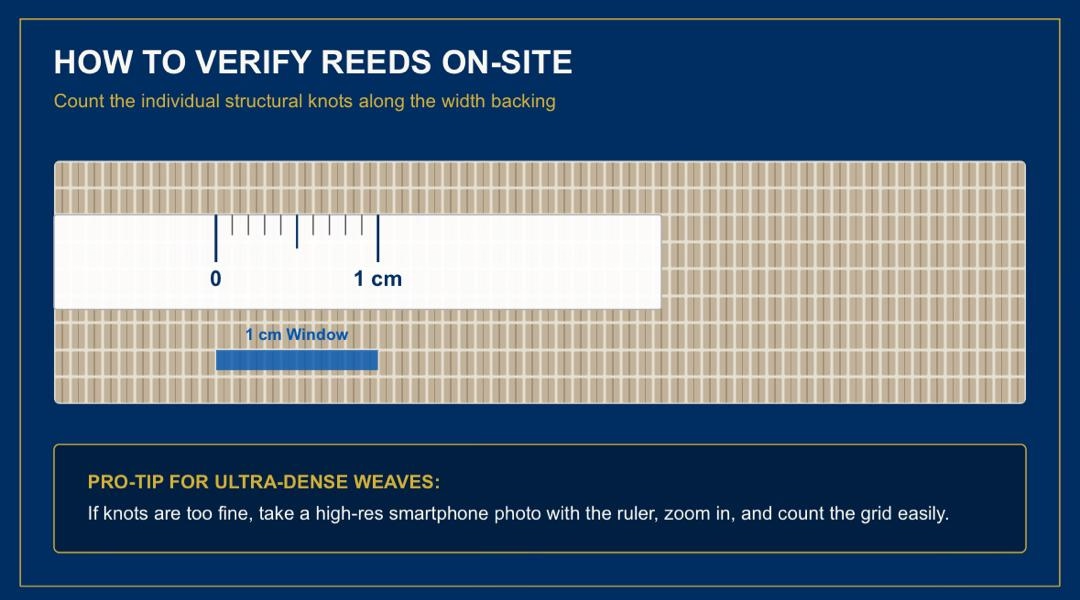
Lay a standard metric ruler horizontally across the carpet backing, aligned parallel to the width (the horizontal direction of the weave, perpendicular to the fringes).
3. Count the Knots
Count the number of individual knots within a 1-centimeter or 10-centimeter window.
Pro-Tip for High-Density Rugs: If the knots are too fine to count accurately with the naked eye, simply place your ruler down and take a high-resolution smartphone photo of the backing. Zoom in on the image to easily count the knots against the millimeter marks.
The Verification Conversion Table
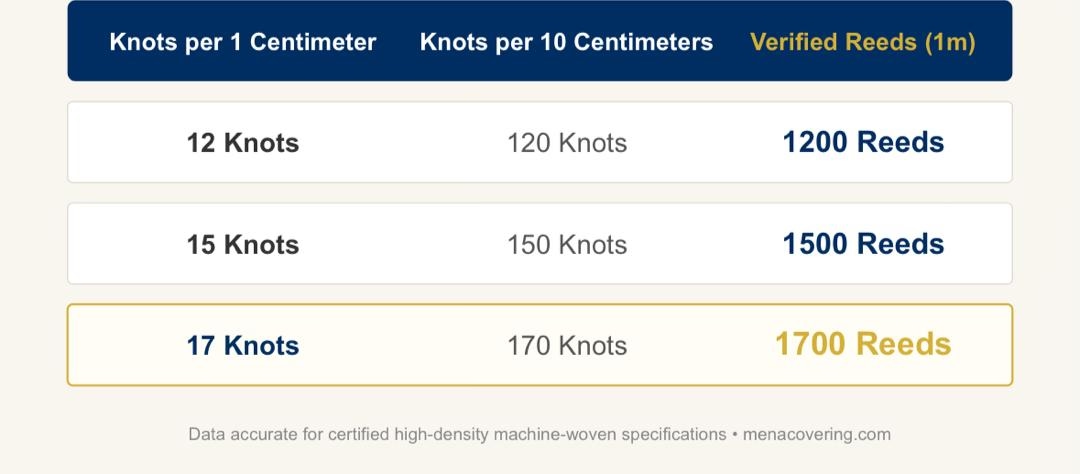
Once you have your centimeter count, use the mathematical baseline below to verify the full 1-meter reed specification:
Premium Focus: The Rise of 1700-Reed Rugs
As textile machinery technology advances, the industry has seen the introduction of ultra-high-density 1700-reed rugs.
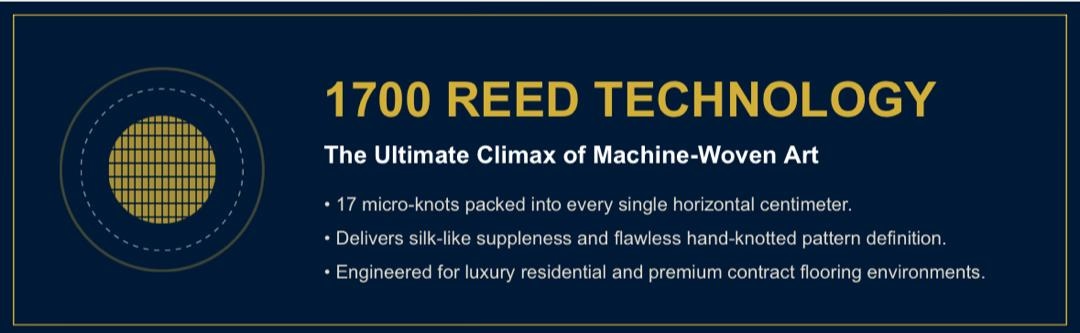
When verified, these pieces reveal an astonishing 17 knots per single centimeter of width. This extreme micro-weave places 1700-reed rugs among the densest and finest machine-woven carpets available globally.
The resulting textile mimics the silk-like suppleness and sharp pattern definition traditionally reserved for museum-quality hand-woven rugs, making them highly sought after for luxury contract and residential placements across the MENA region.