




Carpet is one of the most widely used textile floor coverings in residential, commercial and hospitality interiors. It can provide comfort, warmth, acoustic control, visual identity and protection for the underlying floor while helping designers define the character of a space.
Although carpets vary significantly in appearance, performance and price, most products share the same basic principle: a textile surface known as the pile is attached to one or more backing layers. The pile may be manufactured from natural fibres such as wool or synthetic fibres including nylon, polypropylene and polyester.
This guide explains what carpet is, how it is constructed, the principal types of carpet, the fibres used in manufacturing, common production and patterning methods, important applications and the factors buyers should consider before selecting and installing a carpet.
What Is a Carpet?
A carpet is a textile floor covering consisting of a visible upper surface, called the pile, connected to a supporting backing system. In many tufted carpets, yarn is inserted into a primary backing, secured with a precoat or adhesive layer and reinforced with a secondary backing.
The pile is normally made from thousands of yarn tufts. These yarns may remain as loops, be cut to create individual fibre ends or combine looped and cut areas to produce texture and pattern. Many synthetic carpet yarns are twisted and heat-set to help them retain their form under use.
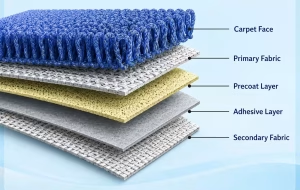
Carpet pile
Primary backing
Precoat layer
Adhesive layer
Secondary backing
What Are the Main Carpet Pile Types?
The surface texture of a carpet is largely determined by the way the yarn is arranged. Three principal constructions are used: loop pile, cut pile and cut-and-loop pile.
Loop Pile
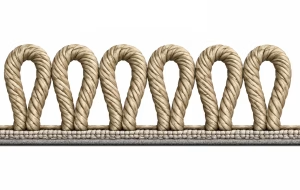
The yarn remains uncut, creating durable loops that can perform well in busy areas.
Cut Pile
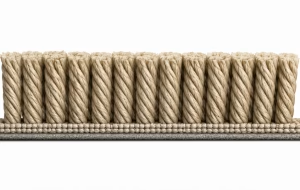
The loops are cut, producing a softer surface that may range from smooth velvet to textured twist.
Cut-and-Loop Pile
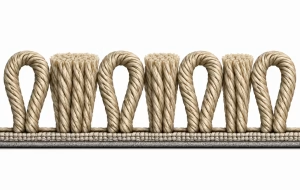
Cut and looped yarns are combined to create sculptured patterns, visual contrast and surface depth.
Which Fibres Are Used to Make Carpets?
Carpet performance depends heavily on fibre selection. The main commercial carpet fibres are wool, nylon, polyester, acrylic and polypropylene. Silk, viscose and cotton are also used, particularly in decorative rugs and specialised products.
No fibre is automatically the best choice for every project. The correct material depends on traffic, desired appearance, cleaning requirements, sunlight exposure, budget and expected service life.
| Characteristic | Wool | Nylon | Polyester | Acrylic | Polypropylene |
|---|---|---|---|---|---|
| Relative price | Very high | High | Medium | Medium | Lower |
| Resilience | Excellent | Excellent | Average | Good | Average |
| Abrasion resistance | Very good | Excellent | Excellent | Average | Good |
| Stain resistance and cleaning | Very good | Very good; may be enhanced by treatment | Good; oily stains need attention | Good | Excellent; oily stains need attention |
| Sunlight resistance | Average | Good to excellent with suitable dyes | Good | Excellent | Excellent when stabilised |
| Resistance to mildew | Poor if continuously damp or soiled | Excellent | Excellent | Excellent | Excellent |
| Typical feel | Warm and soft | Varies by yarn construction | Soft and sometimes silky | Warm and soft | Soft with a waxy feel |
| Reaction to flame | Charring; naturally slower burning | Melts and burns slowly | Melts; performance varies | Burns readily unless modified | Melts at relatively low temperatures |
Important: Fibre type is only one measure of quality. Pile density, yarn twist, pile height, backing construction, finishing treatments and installation quality can be equally important.
Wool Carpet
Wool is a premium natural carpet fibre valued for softness, resilience, warmth and its ability to recover from compression. It is commonly used in luxury residential interiors, premium hospitality projects and high-quality woven carpets. Wool generally costs more than synthetic fibres and requires appropriate cleaning and moisture management.
Nylon Carpet
Nylon, also known as polyamide, is widely selected for commercial and high-traffic applications. It combines excellent resilience with strong abrasion resistance and can be engineered with stain-resistant, antistatic and colourfast treatments. Its durability makes it suitable for hotels, corridors, offices, airports and busy homes.
Polyester Carpet
Polyester can provide strong colour clarity and a soft hand. Finer-denier polyester yarns may feel smooth and silky, while recycled polyester is increasingly used in residential and commercial products. Polyester offers good abrasion resistance but may not recover from crushing as effectively as high-quality nylon.
Polypropylene Carpet
Polypropylene, also called olefin, is valued for affordability, moisture resistance, stain resistance and resistance to mildew. It is frequently used in budget-conscious residential carpets, needle-punched exhibition flooring, mats and indoor-outdoor products. However, it has lower resilience and can be damaged by high temperatures or friction.
Acrylic, Viscose, Silk and Cotton
Acrylic can imitate some of the warmth and softness of wool and generally offers good sunlight resistance. Viscose and silk are used mainly to provide lustre and a luxurious appearance in decorative rugs, although they may need careful maintenance. Cotton is commonly used in lightweight and washable rugs rather than heavy commercial carpeting.
Read more: Top 10 Carpet and Flooring Companies in the Middle East
What Are the Main Categories of Carpet?
Broadloom Carpet
Broadloom, or wall-to-wall carpet, is manufactured in wide rolls and installed over large continuous areas. It is common in hotels, cinemas, homes, corridors and function rooms.
Carpet Tile
Carpet tiles are modular units installed individually. They are widely used in offices and commercial interiors because damaged sections can be replaced without removing the entire floor.
Needle-Punched Carpet
Needle-punched products are nonwoven floor coverings commonly used for exhibitions, temporary events, entry zones and cost-sensitive commercial applications.
Artificial Grass
Artificial turf is designed to imitate natural grass and may be used indoors or outdoors. Products intended for exterior use normally require suitable ultraviolet protection.
Mats and Doormats
Entrance mats, washable mats and throw mats help control dirt and moisture while providing decorative or functional floor coverage in selected areas.
Area Rugs and Runners
Rugs are movable floor coverings used to define spaces, introduce colour and protect selected parts of a floor. Runners are designed for narrow spaces such as corridors and stairways.
How Are Carpets Manufactured?
The main industrial carpet-production methods are tufting, weaving and needle punching. Hand tufting and hand weaving remain important for custom, artistic and luxury products.
Tufting
In tufted carpet production, multiple needles insert yarn into a primary backing fabric. The yarn is then secured with a bonding compound and normally reinforced with a secondary backing. Tufting is fast, flexible and capable of producing loop, cut and combination structures.
Weaving
In woven carpet, the pile yarn and backing structure are formed together on a loom. Axminster weaving enables complex multi-colour patterns and the use of relatively thick yarns, but production is slower and generally more expensive. Wilton weaving is faster and can create refined, velour-like surfaces, although the number of colours may be more limited.
Needle Punching
Needle-punched carpet is produced by mechanically entangling fibres with specialised barbed needles. The result is a dense nonwoven material suitable for exhibitions, temporary installations, automotive applications, mats and selected indoor-outdoor uses.
Hand Tufting and Hand Weaving
Hand-tufted carpets are created by inserting yarn into a stretched foundation using a manual or powered tufting tool. The surface may then be carved to create sculptural depth. Hand-woven products are constructed through traditional weaving or knotting methods and can require significant time and skilled labour.
Methods
These percentages reproduce the illustrative chart in the source presentation and should not be interpreted as a current audited global market estimate.
How Are Patterns, Motifs and Textures Created on Carpets?
Carpet design is not created through colour alone. Manufacturers can control the surface appearance through printing, yarn placement, pile height, weaving construction, carving and finishing. Each production method offers a different balance of design flexibility, colour range, texture, production speed and cost.
The principal methods used to create carpet patterns, motifs and textures include screen printing, Chromojet printing, computer-controlled tufting, Axminster weaving, Wilton weaving, needle punching, hand tufting, hand carving and hand weaving.
Screen Printing
Colour is transferred through rotary or flat screens.
Chromojet Printing
Computer-controlled jets apply dye to the carpet pile.
CAD/CAM Tufting
Digital controls vary yarn colour, position and pile height.
Axminster Weaving
Complex multi-colour designs are woven into the carpet.
Wilton Weaving
Efficient woven production creates refined surfaces.
Needle Punching
Barbed needles mechanically form a dense nonwoven surface.
Hand Tufting
Yarn is manually inserted according to a prepared design.
Hand Carving
Selected pile areas are sculpted to produce depth and relief.
Carpet Printing
Printing applies colour and pattern after the carpet surface has already been formed. It allows manufacturers to decorate large carpet areas without using a separate coloured yarn for every part of the design.
The main carpet-printing systems include rotary screen printing, flat screen printing and Chromojet printing.
Rotary Screen Printing
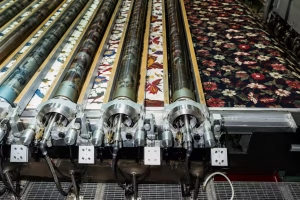
Cylindrical screens rotate continuously above the carpet. Each screen normally applies part of the design or one colour. Rotary systems are suitable for continuous industrial production and repeating patterns.
Flat Screen Printing
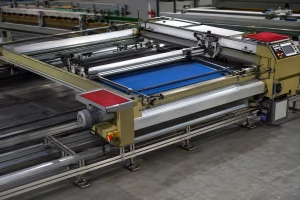
A flat screen is positioned over the carpet and dye is pushed through selected open areas. Separate screens can be used for different colours and sections of the design.
Chromojet Printing
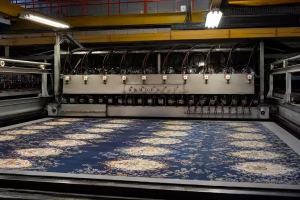
Chromojet technology uses electronically controlled jets to inject measured quantities of dye into the carpet pile. Digital control supports detailed designs, flexible colour placement and rapid design changes.
Tufting with CAD/CAM Graphics Machines
Computer-controlled graphics tufting machines allow manufacturers to create a wide variety of patterns and textures during pile formation. The system can control yarn feed, colour placement, stitch position and pile height according to a digital design.
Different machine configurations can produce loop pile, cut pile, high-low pile and cut-and-loop effects. Compared with highly complex woven production, graphics tufting can provide broad design flexibility at a relatively accessible production cost.
Axminster Weaving
Axminster carpet is produced by inserting selected pile-yarn colours into a woven foundation. The process allows the manufacturer to place different coloured yarns at individual design points, making it suitable for sophisticated motifs and large-scale custom patterns.
Axminster weaving is generally slower and relatively more expensive than tufting. However, it supports a very broad colour range, detailed patterns and the use of thicker yarns. It is widely associated with hotels, casinos, theatres, ballrooms, cruise ships and other premium hospitality projects.
Wilton Weaving
Wilton carpet is also woven, with the pile and backing structure formed together on the loom. The system normally works with fewer colours than an Axminster loom, but it can provide faster production and a dense, refined surface.
Wilton carpets are known for their smooth and often velour-like appearance. Different constructions can create cut pile, loop pile or combinations of both. They are used in premium residential, hospitality and contract interiors.
Axminster
- Very broad colour possibilities
- Suitable for detailed custom motifs
- Can use thicker pile yarns
- Slower production
- Relatively higher production cost
Wilton
- More limited number of colours
- Efficient woven production
- Dense and refined construction
- Cut, loop or combination surfaces
- Smooth or velour-like appearance
Needle-Punching Machines
Needle punching produces carpet without weaving or tufting conventional pile yarn into a backing. Layers of loose fibres are repeatedly penetrated by barbed needles, causing the fibres to become mechanically entangled and form a stable nonwoven surface.
Needle-punched carpets generally have a flatter and denser texture than conventional tufted or woven carpets. Colour effects can be created through fibre blending, surface patterning, rib structures, embossing or printing. The method is frequently used for exhibition carpet, entrance products, automotive flooring, temporary installations and practical commercial surfaces.
Hand Tufting
Hand-tufted carpets are manufactured by stretching a primary fabric over a vertical frame and transferring the design onto the surface. A craftsperson then uses a manual or powered tufting gun to insert yarn through the foundation.
After tufting is completed, adhesive and backing materials are applied to stabilise the carpet. The surface is then sheared, finished and inspected. Hand tufting is well suited to custom sizes, curved shapes, artistic motifs and projects requiring different pile heights.
Hand Carving
Hand carving is a finishing technique used to create visible depth between colours, motifs or pile levels. Skilled workers use specialised cutting and carving tools to remove or shape selected areas of the carpet surface.
The technique can outline motifs, sharpen borders and create sculptured three-dimensional effects. It is frequently combined with hand tufting in custom residential, palace, hotel and luxury interior projects.
Hand Weaving
Hand-woven carpets are constructed manually on a loom. Depending on the product, the yarn may be interlaced, looped or knotted around the warp structure. Hand weaving allows substantial artistic control but requires skilled labour and considerably more production time than most industrial methods.
The final appearance depends on the weaving technique, yarn material, knot or weave density, colour arrangement and finishing. Hand-woven carpets and rugs are commonly selected for decorative, cultural and premium interior applications.
Comparison of Carpet Pattern and Texture Methods
| Method | Design Flexibility | Production Speed | Relative Cost | Typical Result |
|---|---|---|---|---|
| Rotary Screen Printing | Good for repeating patterns | High | Moderate | Consistent printed designs |
| Flat Screen Printing | Good for defined colour areas | Moderate | Moderate | Screen-based motifs |
| Chromojet Printing | Very high digital flexibility | High | Moderate to high | Detailed digitally controlled patterns |
| CAD/CAM Tufting | High texture and pile flexibility | High | Relatively economical | Patterned and textured tufted carpet |
| Axminster Weaving | Excellent colour and motif flexibility | Slower | Higher | Complex, durable woven patterns |
| Wilton Weaving | Moderate colour flexibility | Faster than Axminster | Higher | Dense, refined and velour-like surfaces |
| Needle Punching | More limited structural design | High | Lower | Flat, dense nonwoven surfaces |
| Hand Tufting and Carving | Excellent custom flexibility | Slow | Higher | Custom shapes and sculptured textures |
| Hand Weaving | Very high artistic flexibility | Very slow | High | Traditional and premium rugs |
Selection note: The best patterning method depends on design complexity, number of colours, required pile texture, production quantity, project budget and expected carpet performance.
Where Are Carpets Used?
Commercial Interiors
- Offices
- Banks
- Schools
- Hospitals
- Theatres and cinemas
- Airports
- Retail showrooms
Hospitality Projects
- Hotel guest rooms
- Corridors
- Ballrooms
- Function rooms
- Lobbies
- Restaurants and bars
- Cruise ships
Residential Spaces
- Living rooms
- Bedrooms
- Family rooms
- Television rooms
- Apartments
- Serviced residences
- Stairs and corridors
Commercial Carpet
Commercial carpets must normally tolerate higher traffic levels, rolling furniture, frequent cleaning and long operating hours. Dense, lower-pile constructions and durable fibres such as nylon are often selected for these environments. Carpet tiles are particularly common in modern offices because they support phased installation and localised replacement.
Hospitality Carpet
Hospitality carpet combines technical performance with interior design. Hotel carpets may be installed in guest rooms, corridors, lobbies, restaurants, lounges, ballrooms and function spaces. Each area has different requirements relating to durability, acoustic comfort, cleaning, pattern scale and fire performance.
Large-scale hospitality projects often use custom plans to coordinate different carpet patterns across bedrooms, corridors, public zones and event areas. Direction, pattern repeat, borders and transitions must be considered during both design and installation.
Residential Carpet and Rugs
Residential products usually place greater emphasis on softness, warmth and personal style. Bedrooms may use soft cut-pile carpet, while living spaces may feature wall-to-wall carpet or decorative rugs. Homes with children, pets or heavy daily use may require denser construction and easier-cleaning fibres.
Broadloom Carpet vs. Carpet Tiles
| Factor | Broadloom Carpet | Carpet Tile |
|---|---|---|
| Appearance | More continuous surface with fewer visible joints | Modular appearance; joints may remain visible |
| Transport and storage | Large rolls require more handling space | Compact boxes are easier to store and transport |
| Quantity planning | Requires roll-width and seam calculations | Modular quantities are generally easier to estimate |
| Design flexibility | Wide range of textures and custom patterns | Easy mixing of colours, directions and modular patterns |
| Repair | Damaged sections can be more difficult to replace invisibly | Individual damaged tiles can be removed and replaced |
| Comfort | Can be installed over a separate underlay | Usually relies on the tile backing or integrated cushion |
| Initial cost | May offer lower material cost for large continuous areas | May cost more per square metre but can reduce replacement waste |
How to Select the Right Carpet Quality
Carpet selection should begin with the intended application rather than colour alone. A product suitable for a quiet bedroom may not perform adequately in a hotel corridor, office entrance or airport.
1. Performance vs. Comfort
Performance priorities:
- Higher pile density
- Lower or controlled pile height
- Durable fibres such as nylon
- Stable backing construction
Comfort priorities:
- Softer or finer fibres
- Higher or more luxurious pile
- Quality underlay
- Warm and tactile surface
2. Cost and Affordability
- Compare the relative cost of fibres
- Consider tufted versus woven production
- Include installation and underlay costs
- Calculate expected replacement frequency
- Evaluate cleaning and maintenance expenses
3. Colour and Design
- Coordinate with the interior concept
- Use patterns to conceal soiling in busy spaces
- Check pattern repeat and installation direction
- Consider colourfastness and sunlight exposure
- Approve physical samples before ordering
Traffic Level
High-traffic areas generally require dense construction, durable yarn, stable backing and a surface that can hide minor soiling and wear. Lower-traffic spaces can prioritise softness, depth and visual luxury.
Pile Height and Density
Pile height alone does not determine quality. A very tall but loosely constructed pile may crush more quickly than a shorter, denser surface. Buyers should evaluate the relationship between pile height, stitch rate, gauge, yarn weight and fibre resilience.
Maintenance Requirements
Carpet colour, texture and fibre should match the cleaning resources available at the property. Entry areas, restaurants, entertainment venues and busy corridors require maintenance plans that address dry soil, spills and periodic deep cleaning.
Carpet Installation Methods
Even a high-quality carpet can perform poorly if the substrate, adhesive, seam plan or installation method is unsuitable. Installation should therefore be considered during product selection rather than after the carpet has been purchased.
Direct Glue-Down Installation
The carpet is bonded directly to the prepared subfloor. This method can provide dimensional stability and is widely used in busy commercial environments. The substrate must be clean, dry, smooth and compatible with the selected adhesive.
Underlay and Gripper Installation
An underlay is placed below the carpet, while perimeter grippers hold the stretched carpet in position. This method can improve comfort, insulation and acoustic performance and is frequently used in residential and hospitality spaces.
Double-Stick Installation
In a double-stick system, the underlay is adhered to the subfloor and the carpet is adhered to the underlay. This approach combines cushioning with additional stability and may be selected for certain hospitality and commercial installations.
Other Installation Considerations
- Subfloor moisture and levelness
- Seaming direction and visibility
- Pattern matching and repeat allowances
- Location and fixing of grippers
- Transition profiles at adjoining floors
- Installation waste and spare material
- Labour, adhesive and underlay costs
Carpet Quality, Sustainability and Certification
Environmental and indoor-air-quality considerations are increasingly important in carpet specification. Buyers may evaluate fibre origin, recycled content, production waste, energy use, chemical emissions, product durability and end-of-life options.
The source presentation highlights testing and certification programmes associated with organisations such as the Carpet and Rug Institute, GUT in Europe, textile-testing agencies and environmental certification bodies. It also refers to ISO 14001 environmental-management systems among carpet manufacturers.
Before specifying a product, buyers should request current certificates directly from the manufacturer because standards, product formulations and certification status may change over time.
Questions to Ask a Carpet Supplier
- What fibre and backing materials are used?
- Is the product suitable for the expected traffic classification?
- What fire, slip, acoustic and emission tests are available?
- What cleaning method does the manufacturer recommend?
- Is the product covered by a commercial warranty?
- Can damaged sections or matching stock be replaced later?
- Does the product contain recycled or recyclable materials?
- Which installation method is approved by the manufacturer?
Frequently Asked Questions About Carpets
What is the difference between a carpet and a rug?
A carpet commonly covers a substantial part of the floor and may be permanently installed. A rug is normally a movable textile floor covering that leaves part of the underlying floor visible.
What is carpet pile?
The pile is the visible textile surface of the carpet. It may consist of loops, cut yarn ends or a combination of both. Pile construction affects appearance, comfort, durability and maintenance.
Which carpet fibre is the most durable?
Nylon is widely recognised for resilience and abrasion resistance, making it a frequent choice for high-traffic environments. However, overall durability also depends on density, yarn construction, backing, maintenance and installation.
Is wool better than synthetic carpet?
Wool provides natural softness, resilience and premium appearance, while synthetic fibres may offer lower cost, easier stain management or specialised performance. The better option depends on the project requirements.
Are carpet tiles better than broadloom carpet?
Carpet tiles are easier to transport, plan and replace, making them suitable for many offices and modular commercial spaces. Broadloom can offer a more continuous appearance, greater textural variety and additional comfort when installed over underlay.
What type of carpet is used in hotels?
Hotels use a variety of carpet constructions. Guest rooms may prioritise comfort, while corridors and public spaces need stronger wear resistance. Custom tufted, printed, Axminster and Wilton carpets are commonly associated with hospitality interiors.
What is needle-punched carpet used for?
Needle-punched carpet is commonly used for exhibitions, events, temporary floors, entrances, mats, automotive interiors and selected indoor-outdoor applications because it can be economical and relatively easy to install.
Read more: Carpet One Unveils Expansion Plan to Add 250 New Flooring Stores Across North America
Conclusion
Carpet is more than a decorative textile placed on the floor. It is an engineered surface whose performance depends on pile structure, fibre type, density, backing, manufacturing method, finishing and installation.
Broadloom carpet can create a continuous and comfortable interior, while carpet tiles provide modularity and easier replacement. Woven carpets support sophisticated designs and premium applications, tufted carpets offer production flexibility and needle-punched products serve practical and cost-sensitive markets.
The best carpet is therefore not necessarily the most expensive or the heaviest product. It is the carpet whose construction, fibre, design and installation method are correctly matched to the traffic level, maintenance programme, budget and visual objectives of the project.

