



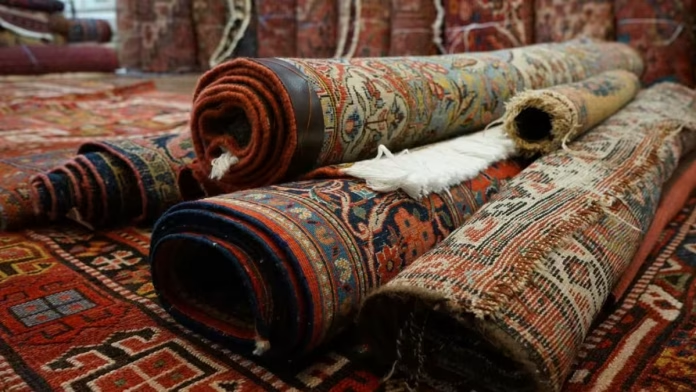
The rising price of handmade Persian carpets has become one of the biggest challenges facing Iran’s carpet industry, reducing its competitiveness in international markets and creating difficulties for domestic consumers, according to officials.
Feizollah Arab-Sorkhi, head of the National Iranian Carpet Center, said increasing production costs have significantly affected the global position of Persian carpets.
Speaking to local media, Arab-Sorkhi explained that rising labor costs and fragmented, non-organized production systems have contributed to higher prices for handmade carpets, making it more difficult for Iranian exporters to compete internationally.
Counterfeit Persian Carpets Continue to Grow
Arab-Sorkhi also warned that imitation products remain a major challenge for the industry. According to the National Iranian Carpet Center, approximately 25% of carpets sold in international markets as Persian-style rugs are imitations.
While Chinese manufacturers generally produce carpets using their own designs, producers in several other countries replicate traditional Persian patterns for export.
He added that around 95% of Iran’s exported handmade carpets are produced in residential workshops, highlighting the industry’s continued dependence on decentralized home-based production.
Pakistan Among the Main Competitors
Industry experts say Pakistan has benefited from insufficient support for Iran’s carpet sector by producing carpets based on traditional Persian designs.
According to Roqayyieh Almasi, Pakistani manufacturers reproduce well-known Iranian carpet styles and market them internationally under famous regional names such as Tabriz, Haris, Afshar, Kashan, and Kerman.
She noted that limited government support has discouraged investment in high-quality handmade carpet production inside Iran, reducing the industry’s ability to compete with lower-cost producers.
Read More: The Persian Carpet in China: A Strategic Analysis of Growth and Cultural Barriers
Industry Faces Rising Costs and Global Competition
As production of handmade Persian carpets continues to decline, increasing labor expenses have placed additional pressure on manufacturers and exporters.
Today, Iran faces strong competition from countries including China, India, Nepal, Pakistan, and Türkiye, all of which have expanded their presence in the global handmade carpet market.
Industry observers believe that improving production efficiency, strengthening intellectual property protection for Persian carpet designs, and increasing support for artisans will be essential to preserving Iran’s position as one of the world’s leading producers of handmade carpets.

