




Mohawk Industries has released its 17th annual sustainability impact report, showcasing significant progress toward its environmental and operational goals while outlining new long-term targets for reducing emissions, waste and resource consumption.
Titled “Designed for Impact,” the 2025 report highlights how the world’s largest flooring manufacturer is advancing sustainability through product innovation, circular economy initiatives and operational improvements across its global business.
Malisa Maynard, Chief Sustainability Officer at Mohawk Industries, said the report serves as both an assessment of the company’s sustainability journey and recognition of the efforts of more than 40,000 employees worldwide.
She added that this year’s report has been redesigned to provide a more streamlined and user-friendly experience while maintaining transparency through additional online resources.
Circular Product Innovation Drives Material Recovery
The report outlines several milestones in Mohawk’s circular economy strategy, including the recovery of more than 49 million pounds of end-of-life flooring products during the year.
Among the company’s product achievements:
- More than 99% of Daltile’s U.S.-manufactured tile collections now contain recycled or reclaimed materials, with over 300 million pounds of materials recovered and reused annually.
- Mohawk’s PureTech waterproof resilient flooring features an 80% organic, renewable polymer core, is PVC-free and contains 70% recycled materials.
- Laminated wood flooring collections continue to maximize the use of recycled and reclaimed wood, helping reduce demand for virgin timber while extending carbon storage.
- The company’s ReCover carpet recycling program in the U.S. increased material recovery by 133% year over year through an expanded retailer pilot and is being extended to additional flooring categories.
- Unilin Panels’ Osiris technology enables the recycling of waste MDF, HDF and laminate boards into new products, making the company the first to commercialize this recycling process.
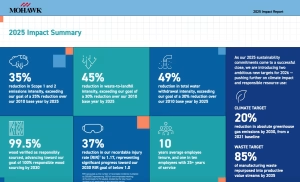
New Sustainability Targets After Exceeding 2025 Goals
Mohawk reported that it surpassed several sustainability targets originally set for 2025.
The company reduced its Scope 1 and Scope 2 emissions intensity by 31%, exceeding its target of 25%. Building on this achievement, Mohawk has established a new goal to reduce absolute Scope 1 and 2 greenhouse gas emissions by 20% by 2030, using 2021 as the baseline.
Manufacturing waste sent to landfill declined by 55%, outperforming the company’s previous target of 30%. Mohawk has now committed to repurposing 85% of manufacturing waste into productive value streams by 2035.
Water withdrawal intensity also fell by 50%, well ahead of the company’s original 30% reduction goal, while responsible water stewardship remains a key operational priority.
In addition, 99.5% of the wood sourced for Mohawk’s flooring, boards and panels was verified as responsibly sourced in 2025, keeping the company on track to achieve 100% verification by 2030.
The company also reported continued improvements in workplace safety, with its global recordable injury rate declining 37% to 1.17, moving closer to its long-term target of achieving a world-class injury rate below 1.0 by 2030.
Read more: Mohawk Group Unveils ‘Techne’ Design Vision at NYCxDesign Festival
Industry Collaboration
Mohawk is also reinforcing its sustainability commitment through industry engagement. The company is sponsoring and participating in the Flooring Sustainability Summit, taking place from July 15 to 17 in Washington, D.C. The event brings together manufacturers, architects, designers and green building professionals to promote collaboration and advance sustainable practices across the flooring industry.
Maynard said collaboration among employees, customers, suppliers and industry stakeholders remains essential to delivering lasting positive outcomes for businesses, communities and the environment.

