




The global carpet industry is entering a decisive phase. What was once driven primarily by cost efficiency and mass production is now being reshaped by sustainability, regulatory pressure, and shifting consumer expectations. Across Europe, the United States, and increasingly the Middle East, buyers are no longer asking only about price and design—they are asking how carpets are made, what materials are used, and what impact they leave behind.
From the editorial perspective of MENA Covering, sustainability is no longer a secondary narrative. It is becoming the central axis around which the future of carpet manufacturing and trade is being built.
What Makes a Carpet Truly Sustainable?
Beyond Materials: A Lifecycle Perspective
A sustainable carpet cannot be defined by a single factor. It is the result of a full lifecycle approach that includes sourcing, production, usage, and end-of-life management. This means evaluating not only the raw materials but also energy consumption, chemical usage, durability, and recyclability.

The Role of Certifications and Standards
Global certifications such as OEKO-TEX®, GRS, and other environmental standards are playing an increasingly important role in validating sustainability claims. However, one of the major challenges remains the inconsistency in certification systems and the growing risk of greenwashing.
From a critical standpoint, the industry must move toward greater transparency, where sustainability is measurable rather than promotional.
Natural Fibers vs Synthetic Innovation
The Return of Natural Materials
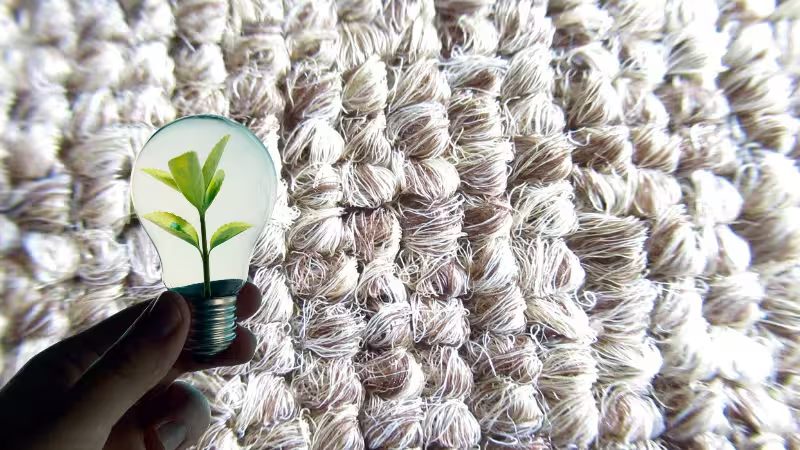
Natural fibers such as wool, jute, cotton, and bamboo are regaining attention due to their renewable and biodegradable nature. These materials align well with premium and eco-conscious markets, particularly in Europe and Scandinavia.
Their appeal is not only environmental but also emotional—consumers increasingly associate natural materials with authenticity and long-term value.
Rethinking Synthetic Fibers
At the same time, synthetic materials are undergoing a transformation. Recycled polyester derived from PET bottles and recyclable nylon systems are redefining the role of synthetics in sustainable production.
Read more: Sellers Textile Engineers Highlights Sustainable Carpet Finishing Innovations at Singapore
Rather than a simple “natural versus synthetic” debate, the industry is moving toward performance-driven material selection, where durability, recyclability, and environmental footprint are evaluated together.
Circular Economy and Recycled Yarn Systems
From Waste to Resource
One of the most significant shifts in the carpet industry is the adoption of circular production models. Materials that were once considered waste—such as plastic bottles and post-consumer textiles—are now being converted into high-performance yarns.
This transition reduces dependency on virgin raw materials while aligning manufacturers with global sustainability regulations.
Industrial Implications
For carpet producers, circularity is no longer optional. Markets such as the European Union are increasingly demanding traceability and recycled content, making circular systems a prerequisite for market access.
From MENA Covering’s analysis, companies that fail to integrate recycled materials into their production strategies risk losing competitiveness in export markets.
Dyeing Technologies: The Hidden Sustainability Factor
Reducing Water and Chemical Impact
Dyeing remains one of the most resource-intensive stages of carpet production. Traditional processes involve high water consumption and significant chemical usage, creating environmental challenges.
Innovations such as low-water dyeing technologies, natural pigments, and non-toxic chemical systems are beginning to address these issues.
Aesthetic and Market Value
Interestingly, sustainability in dyeing is also creating new design opportunities. Natural dyes and eco-friendly processes offer unique color variations that are increasingly valued in premium markets.
In this sense, sustainability is not limiting creativity—it is expanding it.
Energy-Efficient Manufacturing and Smart Production
The Shift Toward Low-Carbon Production
Modern carpet manufacturers are investing heavily in energy efficiency. Solar energy systems, heat recovery technologies, and closed-loop water management are becoming standard in advanced facilities.
These investments are driven not only by environmental concerns but also by economic logic, as energy efficiency directly reduces long-term operational costs.
ESG and Transparency
Sustainability reporting and ESG frameworks are gaining importance, particularly for companies working with international partners. Transparency is becoming a competitive advantage, not just a compliance requirement.
Design Evolution in the Era of Sustainability
From Aesthetics to Responsibility
Sustainability is influencing not only how carpets are produced but also how they are designed. Minimalist patterns, natural color palettes, and organic textures are becoming dominant trends.
Regional Design Differences
While European markets emphasize simplicity and ecological harmony, Middle Eastern markets still value richness and detail—but with increasing interest in sustainable materials. This creates a hybrid design language that combines tradition with innovation.
Global Market Dynamics and Demand Shifts
Europe: Regulation-Driven Demand
Europe remains the most advanced market in terms of sustainability requirements. Strict regulations and informed consumers are pushing manufacturers toward certified and traceable products.
United States: Performance Meets Sustainability
In the U.S., sustainability is growing in importance, particularly in commercial projects, where durability and lifecycle performance are critical.
Middle East: Emerging Opportunity
The Middle East, including Saudi Arabia and the UAE, is gradually adopting sustainability, driven by large-scale development projects and increasing environmental awareness.
From an editorial perspective, this region represents one of the most important growth opportunities for sustainable carpets in the coming decade.
Read more: AI, Material Innovations and Sustainable Design: Patricia Urquiola’s ‘among-all’ at Heimtextil 2026
Challenges Facing Sustainable Carpet Production
Cost vs Competitiveness
One of the main barriers remains cost. Sustainable materials and processes often require higher initial investment, making price competitiveness a challenge in certain markets.
Infrastructure and Supply Chain Gaps
Recycling systems and certified raw material supply chains are still developing, particularly outside Europe.
The Risk of Greenwashing
Perhaps the most critical issue is the gap between perception and reality. As sustainability becomes a marketing tool, the risk of superficial claims increases, potentially undermining trust in the industry.
The Future Outlook: A Value-Driven Industry
The carpet industry is moving toward a value-driven model where sustainability, design, and innovation define competitiveness.
For leading producers such as Türkiye, this transition represents a strategic opportunity. With strong manufacturing infrastructure and global market access, the ability to integrate sustainability into core operations will determine long-term success.
From MENA Covering’s viewpoint, the next decade will not be dominated by the largest producers, but by those who can adapt fastest to this new paradigm.
Join the Discussion
Sustainability is reshaping the carpet industry—but the transformation is still ongoing.
Do you believe sustainable carpets can achieve price competitiveness in global markets?
Which factor will define the future more: materials, technology, or regulation?
Share your thoughts in the comments and join the conversation.

