



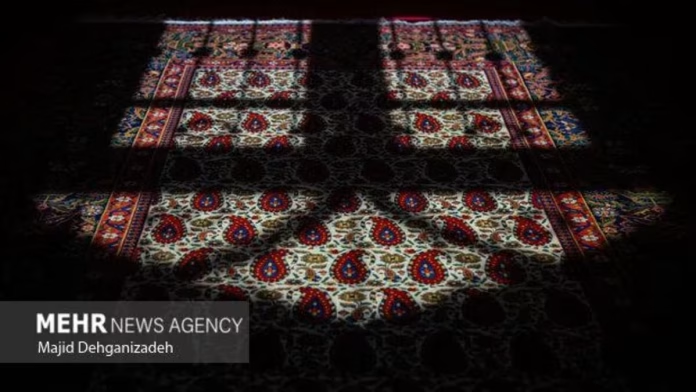
A rare Qajar-era Persian carpet, woven more than a century ago by schoolgirls in Tehran, was unveiled this week at the Tehran Carpet Museum as part of the celebrations marking Tehran Week. The unveiling drew widespread attention from art historians, cultural enthusiasts, and media outlets for its exceptional craftsmanship and historical significance.
According to Mohammad Javad Inanlou, Director of the Tehran Carpet Museum, the masterpiece was woven in 1344 AH (around 1925 CE) by a group of young students at a girls’ school during the Qajar dynasty. “This carpet is not only a unique work of art but also a living document of Tehran’s cultural and social history,” Inanlou said.
A Symbol of Heritage and Identity
Experts describe the piece as one of the most significant historical carpets preserved in Iran — both for its intricate design and for the rare fact that it was created by students during a period when women’s participation in arts and crafts was limited. The motifs and color palette reflect the Qajar artistic style, characterized by elaborate floral arrangements, symmetrical geometry, and influences from both Persian and European aesthetics of the time.
The unveiling highlights the museum’s ongoing efforts to preserve and promote Iran’s carpet-making heritage, particularly those works that shed light on the country’s educational and artistic evolution.
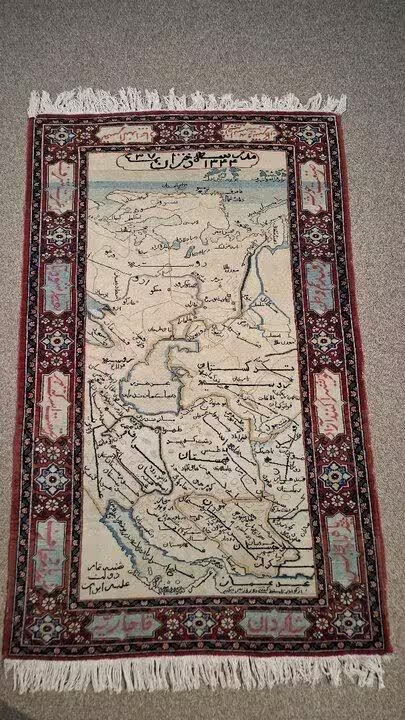
Persian Carpets: Weaving the Story of a Nation
For centuries, Persian carpets have been more than decorative art — they are woven stories of culture, spirituality, and craftsmanship. Each hand-woven masterpiece reflects Iran’s rich artistic legacy, from intricate knotting traditions passed down through generations to designs inspired by mythology, poetry, and nature.
The newly unveiled Qajar-era piece serves as a tangible reminder of Tehran’s artistic past, offering visitors a glimpse into a period when education, art, and national identity were intricately interwoven — quite literally — through the timeless beauty of the Persian carpet.

