



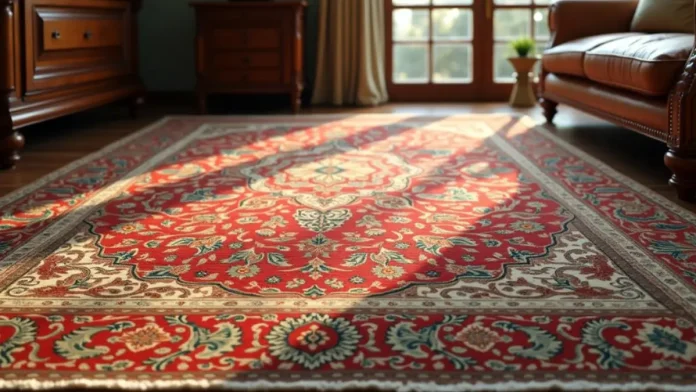
Persian carpets are among the most celebrated cultural treasures in the world, admired for their exquisite craftsmanship, intricate patterns, and centuries-old heritage. Originating in Iran, these handwoven masterpieces are not only works of art but also functional investments that can last for generations.
Yet, their global popularity has also led to widespread imitation. For buyers, collectors, and enthusiasts, the ability to distinguish an authentic Persian carpet from a replica is essential. Here are four key ways to identify a genuine Persian rug.
1. Examine the Knots: The Foundation of Authenticity
The knotting technique is one of the most reliable indicators of a carpet’s authenticity. Persian carpets are hand-knotted, a time-intensive process that sets them apart from mass-produced alternatives.
- Knot Density (KPSI – Knots Per Square Inch): Authentic Persian rugs typically feature anywhere from 120 to 800+ knots per square inch, enabling intricate, highly detailed designs. The higher the knot density, the finer the quality.
- Persian vs. Turkish Knots: Most Persian carpets use the asymmetrical Persian (Senneh) knot, which allows for delicate patterns. The symmetrical Turkish (Ghiordes) knot is more common in rugs from Turkey and the Caucasus.
- Handmade vs. Machine-made: Machine-made carpets often look too perfect. Hand-knotted rugs may have slight irregularities, a hallmark of true craftsmanship.
2. Analyze the Material: Wool, Silk, and Natural Dyes
The materials used in Persian carpets reveal much about their origin and authenticity.
- Wool Quality: The majority of Persian carpets are woven from high-grade wool, prized for its softness, durability, and natural sheen. Some regions also use camel or lamb’s wool for unique textures.
- Silk Carpets: Often reserved for luxurious, high-value pieces, silk rugs are fine, luminous, and intricately detailed. Authentic silk feels soft and warm to the touch, unlike viscose or artificial substitutes.
- Natural Dyes: Traditional Persian carpets are dyed using plant-based and mineral dyes. These colors mature gracefully, developing a patina over time. In contrast, synthetic dyes often look overly bright and may bleed when lightly rubbed with a damp cloth.
3. Study the Design and Patterns: Regional Identity
Persian carpets are steeped in cultural symbolism, with each region of Iran producing distinctive patterns and weaving traditions.
-
Famous Designs:
- Isfahan: Central medallions surrounded by elegant floral motifs.
- Kashan: Intricate floral patterns with rich colors.
- Heriz: Bold, geometric designs in durable weaves.
-
Regional Signatures:
- Tabriz: Renowned for high knot density and detailed designs.
- Qom: Often woven in pure silk with highly refined patterns.
- Symmetry and Imperfection: Genuine handwoven carpets may show minor asymmetries—an authentic sign of their handmade nature. Machine-made carpets, by contrast, are almost always perfectly symmetrical.
4. Consider the Age: Value Through Time
Age plays a significant role in both authenticity and value.
- Antique, Vintage, or New: Rugs over 100 years old are considered antiques, while those between 30–100 years are classified as vintage. Their natural fading and softened tones are highly prized.
- Patina: Authentic Persian carpets develop a distinctive sheen with age and use. Even wear across the pile is a positive sign, while patchy restoration can affect value.
- Provenance: Documentation of a carpet’s history, including its region of origin and ownership, can further authenticate and enhance its value.
Conclusion
Identifying an authentic Persian carpet requires careful observation and an appreciation of traditional craftsmanship. By studying a rug’s knots, materials, designs, and age, buyers can distinguish genuine pieces from imitations.
Whether you are a seasoned collector or purchasing your first Persian rug, these four markers will help ensure that your investment is not just a decorative item, but a timeless work of art—woven with history, culture, and unmatched skill.

