




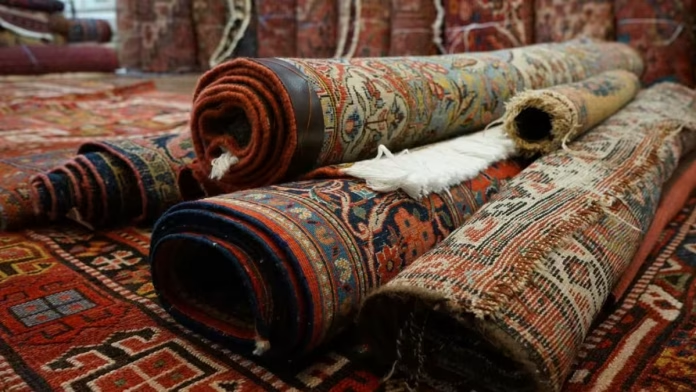
The history of Iranian carpets is one of the oldest continuous artistic traditions in the world. Carpet weaving in Iran has evolved over thousands of years, reflecting cultural, social, and artistic changes across different historical periods.
Early Origins of Carpet Weaving in Iran
Evidence suggests that carpet weaving in the region dates back to ancient times, possibly as early as the Bronze Age. One of the most important surviving examples is the Pazyryk carpet, dating to around the 5th century BCE. Its advanced design and weaving technique indicate that carpet-making traditions were already highly developed at that time.
Carpets in the Achaemenid and Sassanid Periods
During the Achaemenid and Parthian eras, carpets were considered valuable luxury items and were used in royal and ceremonial contexts. By the Sassanid period, carpet weaving had become a refined and established craft. Carpets were commonly used in palaces and royal courts, showing both artistic and functional importance.
Read More: Iranian Carpets Persist in Global Markets Despite Challenges
Development After the Islamic Conquest
After the Islamic conquest, carpet design began to incorporate new artistic influences. Geometric patterns, floral motifs, and calligraphic elements became more common. This period marked an important transformation in the visual identity of Iranian carpets.
The Golden Age of Carpet Weaving
The Safavid period is widely regarded as the golden age of Iranian carpet weaving. During this era, organized workshops were established, and highly skilled artisans created complex and finely detailed carpets. Silk materials and intricate designs were widely used, and many of the most famous historical carpets originate from this period.
Later Historical Developments
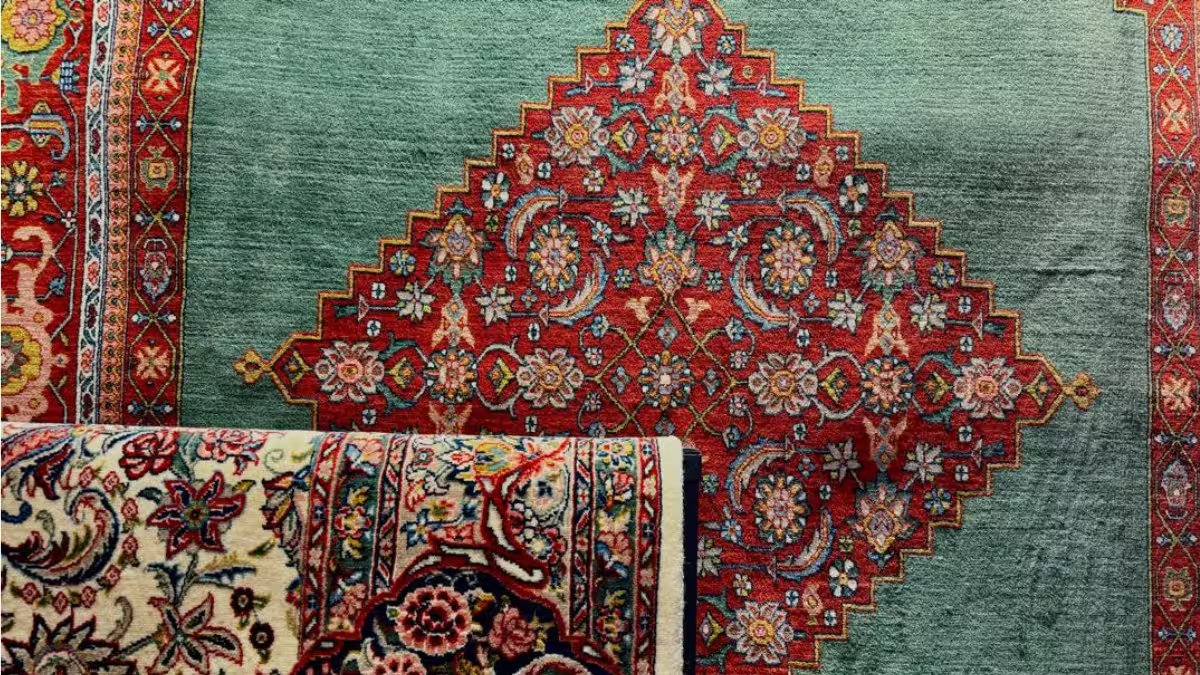
In later periods, including the Mongol, Timurid, and Qajar eras, carpet weaving continued to evolve. Different regions developed their own distinctive styles, leading to a rich variety of designs and techniques. Nomadic, rural, and urban weaving traditions all contributed to this diversity.
Modern Era of Iranian Carpets
In the modern period, carpet weaving remains an important cultural and economic activity. While industrial production has increased, traditional handwoven carpets are still preserved and valued as part of Iran’s artistic heritage.
Conclusion
Iranian carpets represent a long-standing artistic tradition that has developed over many centuries. Each historical period has contributed unique styles and techniques, creating a rich cultural legacy that continues to this day.

