




Ayda Merza is a Kuwaiti carpet collector and trader specializing in luxurious and unique carpets. Thanks to her extensive knowledge and innate passion, the name Ayda Merza has become synonymous with exceptional carpets across the region. She is widely admired for her ability to accurately evaluate the quality and value of each piece, as well as for her insight into preserving the beauty of fine carpets.
Ms. Merza, please share more details about your biography, background, and success story behind the Ayda Merza Gallery.
I was born on November 2, 1964, in Tehran. My father is Kuwaiti but originally from Isfahan, and my mother is from Tehran. We lived in Kuwait, where I completed my primary education. Later, we moved to Montreal, Canada, where I studied marketing. Afterward, I returned to Kuwait and worked for Kuwait Airways and later for Kuwait Petroleum, until a serious accident changed my life in 2006.
From that point on, I returned to my passion and hobby—carpets. I began my journey by studying carpets through books and online resources. Then I decided to travel to different cities in Iran, including Tehran, Kashan, Isfahan, Qom, Tabriz, Bijar, Malayer, and Hamedan, to explore the carpets of each region.
Also Read: Art & History in Every Knot”: Iranian Handwoven Carpet Art Shines in Berlin
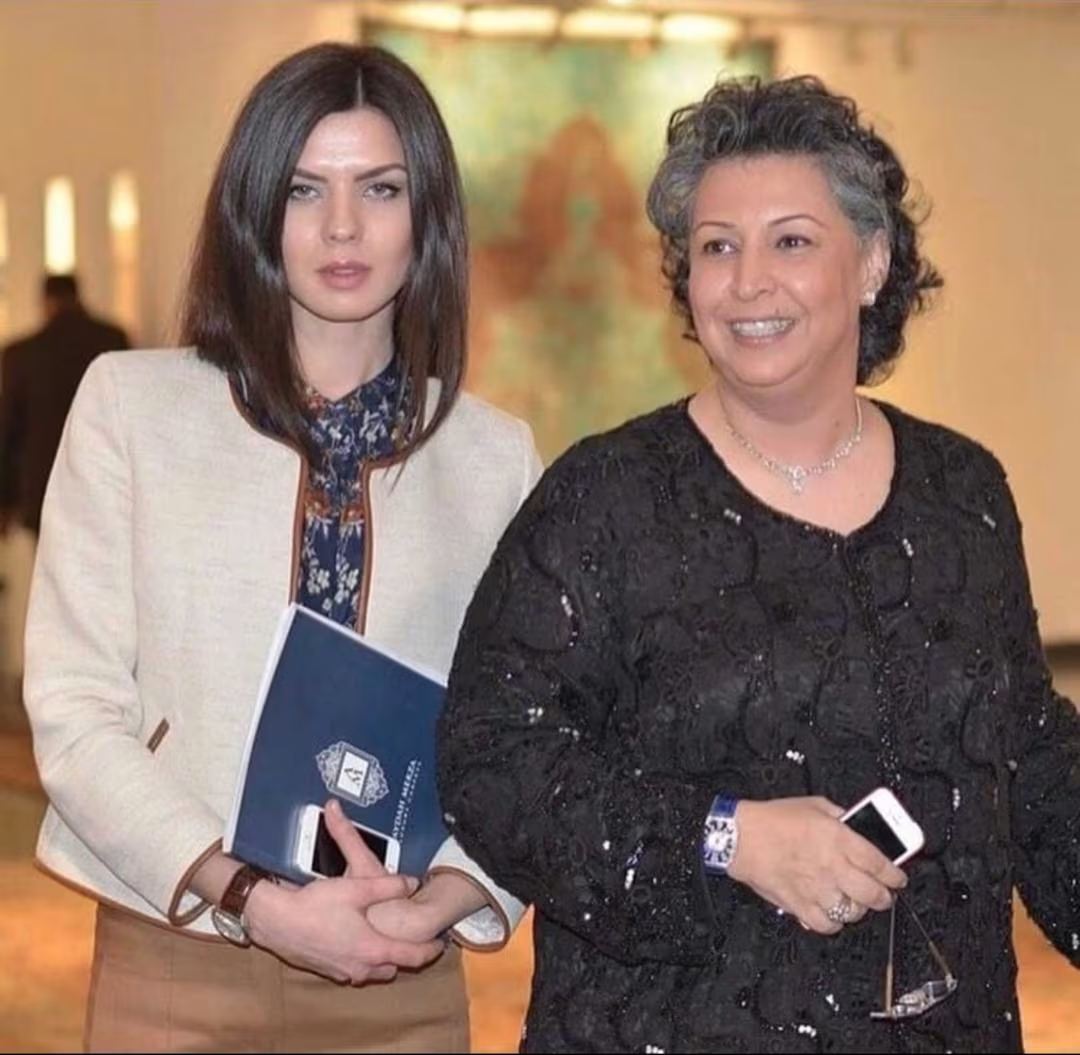
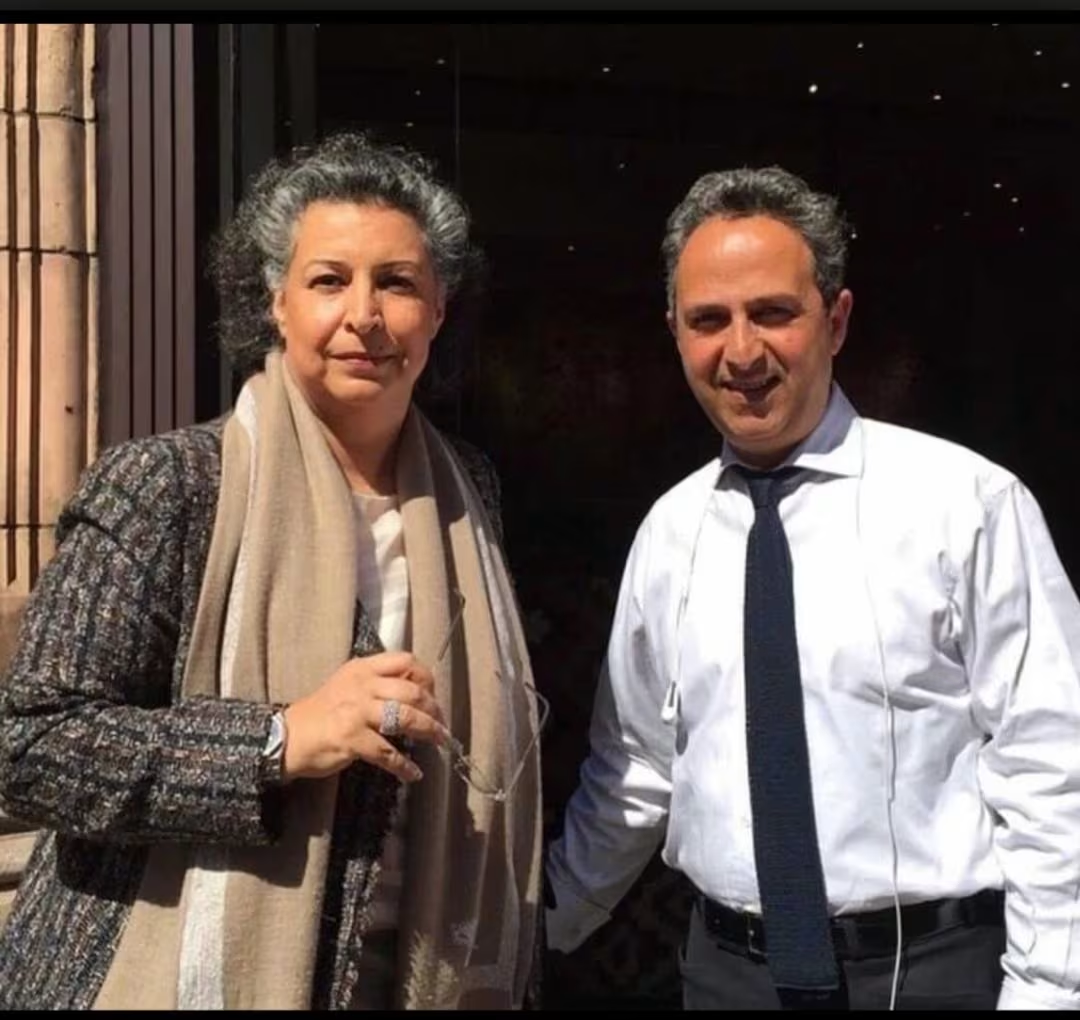
Toward the end of 2006, I began organizing my own exhibitions in Kuwait. The first international exhibition I participated in was in Hannover, followed by Tehran, Istanbul, and Beirut. I have also visited major museums around the world, including the Tehran Carpet Museum (Iran), LACMA in Los Angeles (USA), the Victoria and Albert Museum in London (UK), the Museum of Islamic Art in Doha (Qatar), and the Pergamon Museum in Berlin (Germany). During the same period, I visited Sheikh Zayed Grand Mosque and Sultan Qaboos Grand Mosque to admire their extraordinary carpets.
I continued to seek deeper knowledge about carpets and began attending carpet exhibitions worldwide. To see the famous Pazyryk Carpet, I traveled to the Hermitage Museum in Saint Petersburg. Every year, I publish books featuring the latest carpets I have acquired, excluding those that have been sold. The latest edition of my book was published in 2020.
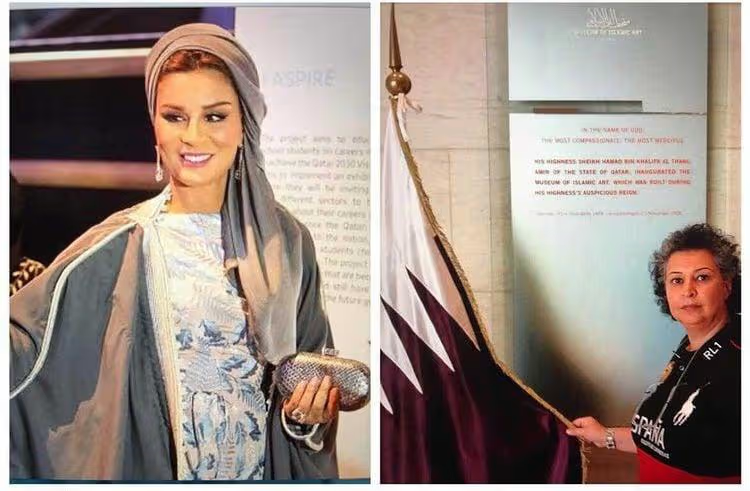
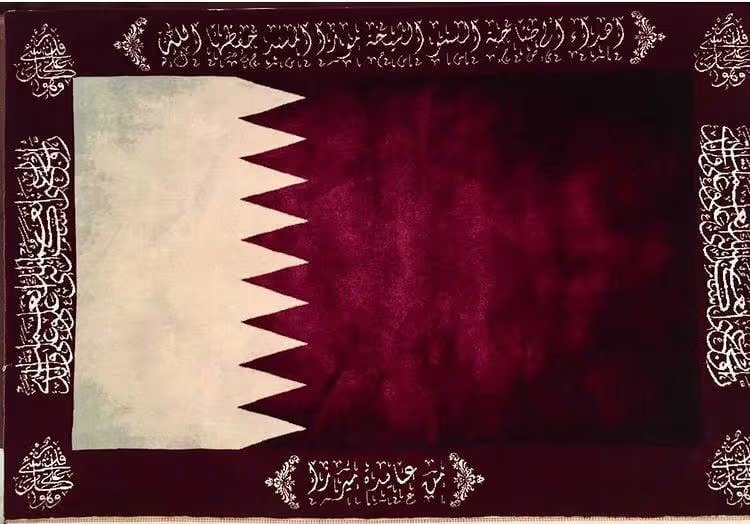
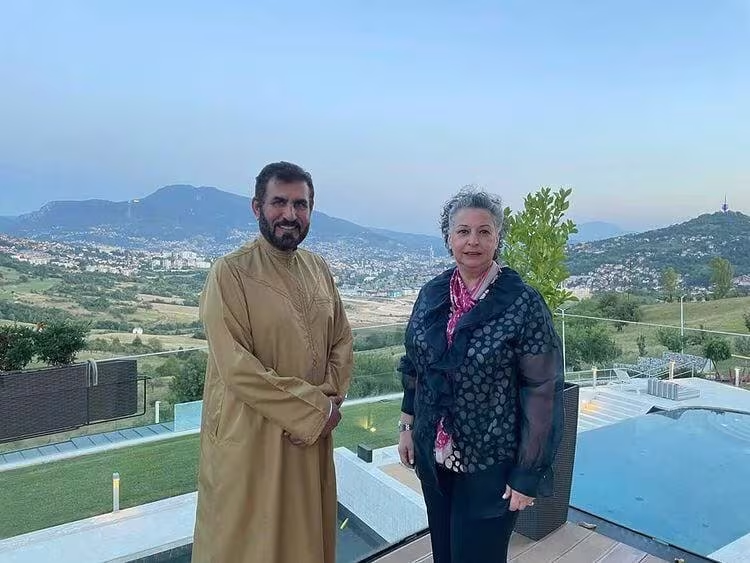
My book was not published in 2021 because I did not acquire a significant number of new carpets. However, I am not a carpet dealer who buys ordinary carpets for everyday use. Even when I was offered a blank check, I refused to sell my carpets. I truly love carpets and have always been interested in rare and precious pieces.
The MENA region is an important market for carpet professionals. Please tell us about your exhibitions in the region and the types of carpets you collect and offer to clients.
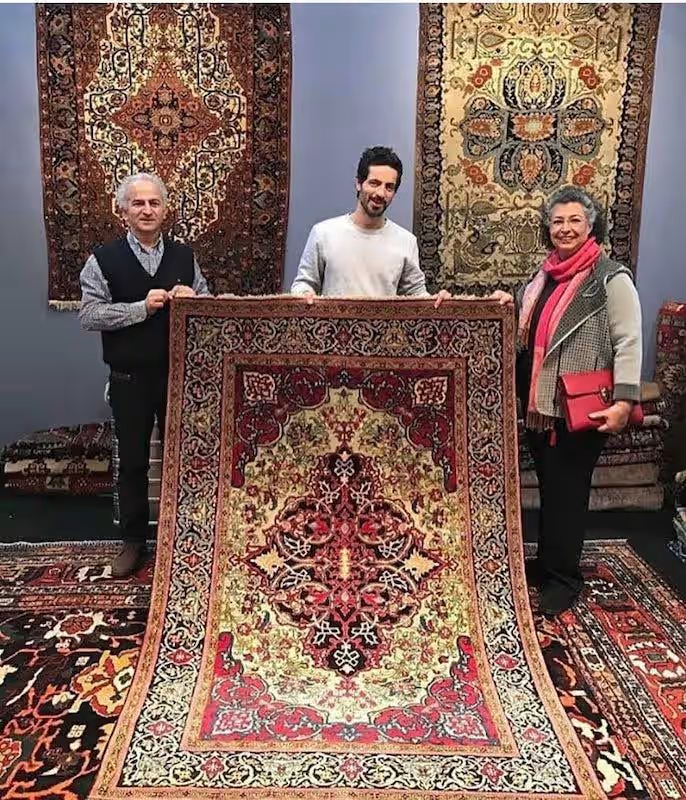
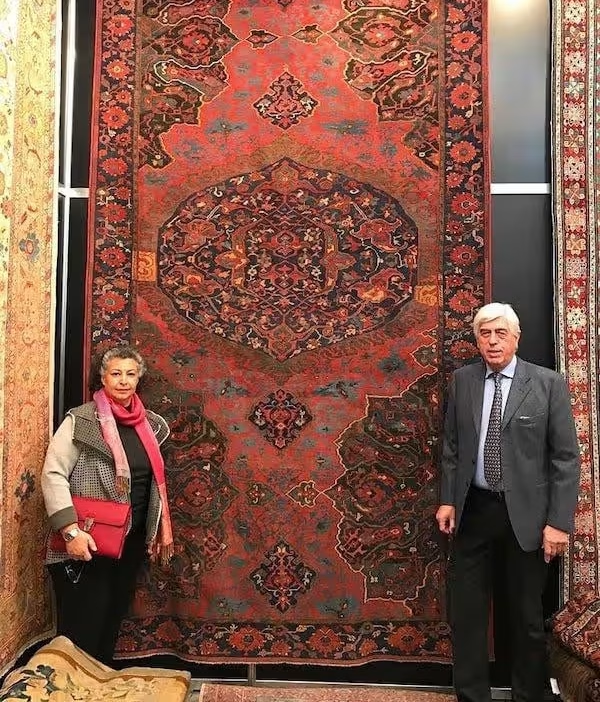
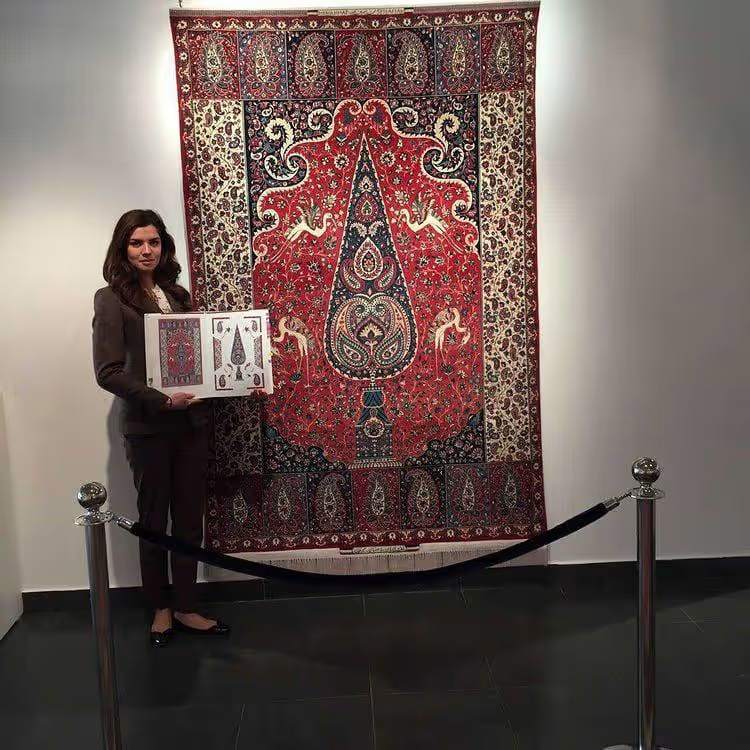
I built a new home specifically to establish a unique gallery that meets high standards and uses professional lighting. The size of my gallery is 12 by 9 meters. In my gallery, visitors can see extremely rare carpets, unique designs, and masterpiece-quality pieces. These carpets are collectible, highly attractive, and carefully selected during my travels.
In addition, my gallery includes carpet books collected from around the world. Many of my carpets are certified. Each carpet in my gallery has its own stand displaying the relevant certificate and reference book. The gallery also includes a shop offering additional carpets.
I have sold some of my collections to well-known figures, including King Abdullah bin Abdulaziz Al Saud. One of these masterpieces was created by the renowned master Baqer Seirafian. Other distinguished clients include the Sultan of Brunei, Queen Rania, and Sheikha Moza Al Missned, with whom I am currently planning a meeting.
In your opinion, what makes a carpet truly unique and special?
A rare and distinctive design, the use of natural colors that match the theme of the carpet, and a high knot density are among the key factors that make a carpet unique and special.
After the COVID-19 pandemic and vaccination rollout, how do you foresee the global carpet market?
Undoubtedly, the world has been affected by the coronavirus. However, fortunately for me, the situation was the opposite. During the pandemic, I sold around 15 carpets and conducted an interview with a well-known television channel inside my gallery, which helped increase my visibility. Following that interview, I received inquiries from people around the world, including Canada, Japan, Europe, the United States, and even the daughter of King Abdullah.
As a lover of Iranian carpets, what is your opinion on the current state and future of handmade carpets in Iran?
I do not believe the Iranian handmade carpet industry is currently moving in the right direction, as most designs are copied. Copying designs keeps us at the same level and prevents the creation of truly unique carpets. Therefore, selecting new designs and color palettes would make a significant difference in Iranian handmade carpets.
Instead of copying modern designs, we should allow classic Iranian carpets to re-emerge. Additionally, Iranian carpets are expensive, which does not align well with today’s global economic conditions. In my opinion, the prices of Iranian carpets should be reduced.
Interview by Kohan Textile Journal with Ayda Merza, International Carpet Collector

