



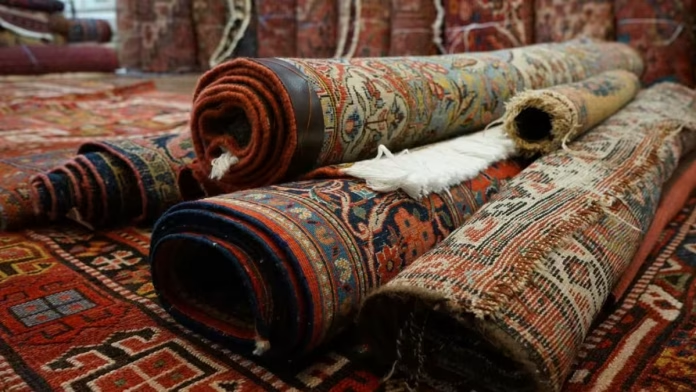
Persian carpets, celebrated globally for their exquisite craftsmanship and deep cultural heritage, continue to enjoy strong demand in Saudi Arabia. These handwoven masterpieces are not only prized as luxury décor items but also symbolize cultural pride, wealth, and timeless tradition. Today, Saudi Arabia stands as one of the most important markets for Iranian carpets, where both traditional and modern tastes shape buyer preferences.
Cultural Significance
Persian carpets have long held a place of honor in Saudi households, palaces, and official spaces. Beyond their decorative function, they are viewed as heirlooms and investments, often passed down through generations. The appreciation for Persian craftsmanship aligns seamlessly with Saudi Arabia’s affinity for grandeur and cultural refinement, ensuring the enduring popularity of these rugs across the Kingdom.
Popular Carpet Designs in Saudi Arabia
Medallion and Corner (Toranj):
Among the most iconic Persian designs, Toranj carpets feature a striking central medallion framed by intricate floral and geometric motifs. These regal patterns are especially favored in majlis and large living rooms, where they serve as focal points in expansive spaces.
Floral Motifs:
Floral Persian carpets, featuring roses, vines, and lotuses, remain highly sought after in Saudi Arabia. Their vibrant yet harmonious color palettes—rich reds, deep blues, and golden accents—blend seamlessly with traditional Saudi interiors, bringing a sense of warmth and elegance.
Geometric Patterns:
For Saudi buyers with more modern tastes, geometric designs are gaining traction. Featuring diamonds, hexagons, or lattice motifs, these carpets are often woven in neutral shades such as ivory, beige, and light blue, making them ideal for contemporary interiors that balance simplicity with heritage.
Hunting Scene Carpets:
One of the most culturally resonant designs, hunting scene carpets depict equestrian hunts set in lush landscapes. These storytelling pieces reflect values of courage, strength, and tradition, resonating deeply with Saudi culture and frequently displayed in formal majlis settings.
Herati Design:
Featuring a repeating diamond motif surrounded by floral or leaf patterns, the Herati design is admired for its elegance and adaptability. Its calm, repetitive symmetry and softer tones make it a versatile choice for both traditional and modern Saudi homes.
Preferred Color Schemes
Color is a defining factor in Saudi buyers’ choices. While traditional preferences remain strong, modern tastes are also influencing the market.
- Deep Reds and Blues: Valued for their regal character and classic Persian charm.
- Gold and Ivory: Favored in modern luxury interiors for their subtle elegance.
- Green and Earthy Tones: Chosen for bedrooms and sitting rooms to evoke tranquility and a natural atmosphere.
Payar Carpet: Meeting Saudi Demand
Among the prominent producers of Persian carpets for the Saudi market is Payar Carpet, a company known for blending traditional Iranian weaving with modern design trends. From medallion masterpieces to floral and geometric collections, Payar Carpet delivers rugs that align with Saudi preferences in both design and color. With a reputation for authenticity, fine materials, and innovation, the company continues to strengthen cultural and commercial ties between Iran and Saudi Arabia.
Conclusion
The popularity of Persian carpets in Saudi Arabia reflects more than just aesthetic appeal—it is a cultural bridge that intertwines luxury with heritage. Designs such as medallion motifs, florals, and hunting scenes are admired not only for their artistry but also for their alignment with Saudi traditions and lifestyles. With producers like Payar Carpet responding to these tastes, the legacy of Persian carpets in Saudi Arabia remains vibrant, ensuring their place as both luxury décor and cultural treasures.

