




Once the jewel of Iran’s non-oil economy, the nation’s famed handmade carpet industry is facing a dramatic collapse. Export revenues, which exceeded $2 billion in the early 1990s, have plunged by 95% since the reimposition of U.S. sanctions in 2018, threatening a cultural legacy and the livelihoods of nearly two million Iranians.
According to an AFP report, annual exports fell to just $41.7 million in the last Persian calendar year ending in March, down from over $400 million in 2017. The U.S., previously the buyer of 70% of Iranian carpets, was abruptly lost as a market. Zahra Kamani, head of Iran’s National Carpet Centre, called the sanctions “unkind and cruel,” noting their devastating effect on weavers across the country.
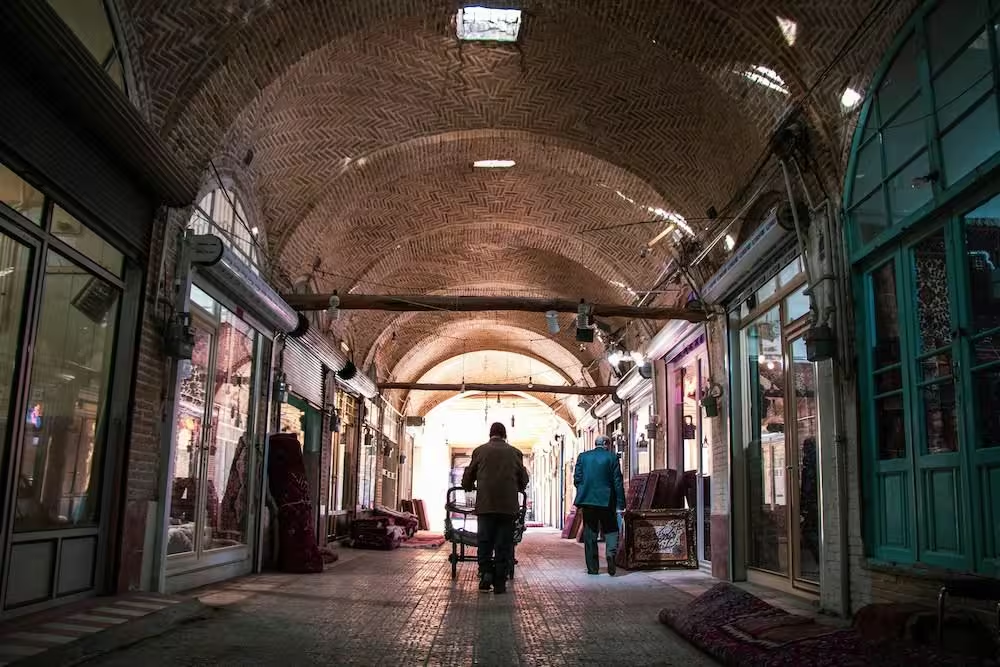
Domestic policies have further compounded the crisis. Asr-e-Iran described a 2018 foreign exchange repatriation rule as a “domestic sanction,” crippling exporters forced to use official currency channels incompatible with a largely cash-based trade. This policy accelerated Iran’s fall from world leader to sixth place, surrendering market share to India, China, Nepal, and Pakistan.
The decline is starkly symbolized by the fate of the Iran Carpet Company, founded in 1935. Once the country’s largest producer and exporter, it deteriorated after privatization to banking institutions unfamiliar with the industry, leaving unpaid weavers and heavy debts.
Social consequences are severe. ISNA reports that in Hamedan Province alone, 60,000 people depend on carpet weaving, yet few receive insurance support. Nationally, many rural women who relied on weaving for income now face uncertainty.
Global demand shifts add to the woes. With luxury silk carpets priced at $30,000–$40,000, buyers are increasingly hesitant, while many young Iranians, hit by inflation, now opt for factory-made alternatives. “Even though I always wanted handwoven carpets for my dowry… we couldn’t afford them,” a 31-year-old bride told AFP.
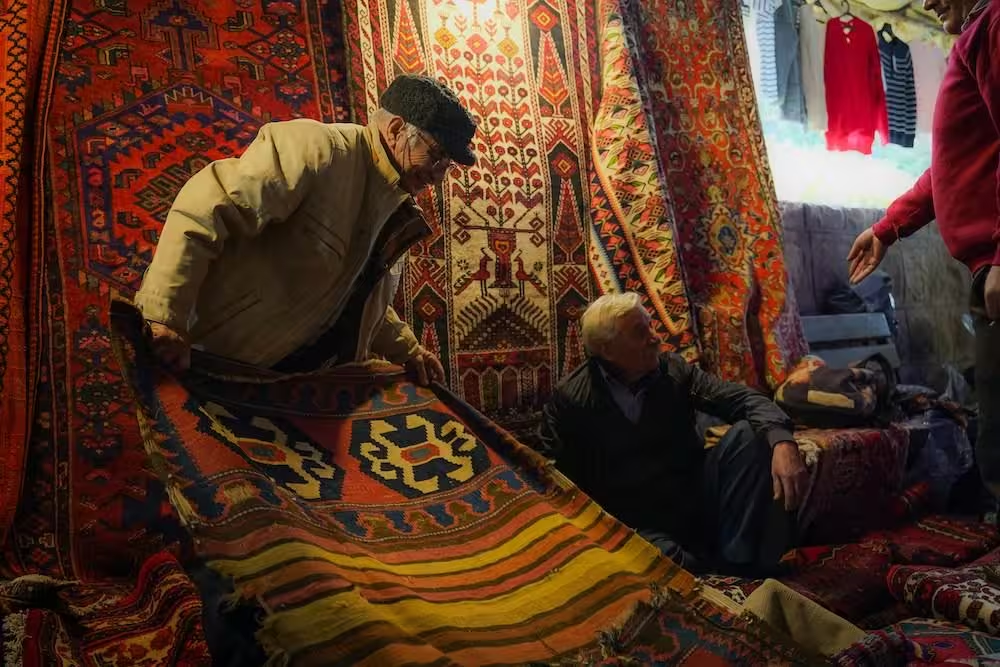
Still, industry figures voice hope. Prominent trader Ahad Azimzadeh urged producers to embrace modern tastes while preserving authenticity. Trade Minister Mohammad Atabak has acknowledged past policy errors and promised new measures to revive exports.
Yet with workshops relocating abroad and global rivals surging ahead, Iran’s legendary handwoven carpets—once ambassadors of Persian culture—face an uncertain future. As AFP concluded, the legacy of the Persian rug now hangs precariously by a thread.

