




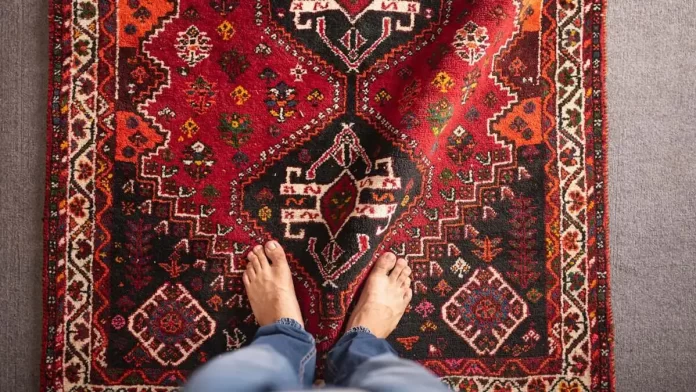
Iran’s handwoven carpet industry—long celebrated as a global symbol of craftsmanship, cultural depth, and artistic excellence—is undergoing a profound transformation. Inside the domestic market, economic pressure and declining purchasing power are reshaping consumer behavior, placing traditional Iranian carpets in direct and unequal competition with low-cost machine-made rugs and Afghan handwoven products.
What was once a market driven by authenticity and quality is increasingly dominated by price sensitivity. This shift is not only affecting sales—it is challenging the very identity of Iranian handwoven carpets.
Domestic Demand Shifts from Heritage to Affordability
As household budgets tighten, Iranian consumers are prioritizing visual appeal and affordability over durability, material quality, or provenance. Industry insiders note that once handwoven carpet prices cross a certain threshold, demand drops sharply.
This has led to growing popularity of:
- Tribal-style and nomadic designs
- Coarse-weave and Gabbeh-inspired carpets
- Rustic aesthetics that resemble handmade products but are faster and cheaper to produce
While these products meet short-term consumer expectations, they weaken long-term standards that once defined the Iranian carpet market.
Also Read: Iran’s Handwoven Carpet Exports Plunge to Historic Lows Amid Sanctions and Economic Pressures
Cost Reduction Comes at the Expense of Quality
To remain competitive, many producers have been forced into difficult compromises:
- Lower-grade wool replacing premium fibers
- Chemical dyes substituted for natural dyes
- Reduced knot density to speed up production
- Shortened weaving cycles driven by cash-flow pressure
In many cases, weavers receive only partial payments during production, incentivizing speed over precision. The result is a noticeable decline in durability—carpets that lose color, shape, or structural integrity after limited use.
Afghan Handwoven Carpets: A Structural Competitive Advantage
A critical pressure point comes from Afghan handwoven carpets, which benefit from significantly lower labor costs—often estimated at one-third of Iranian levels. This allows Afghan producers to offer handwoven products at prices Iranian workshops simply cannot match.
In the lower-end market, Afghan carpets often outperform weakened Iranian alternatives. The situation worsens when such carpets enter the market informally and are sold under Iranian labels—damaging trust and blurring distinctions for consumers.
This is not merely a trade issue; it is a brand erosion problem.
Why Handwoven Carpets Cannot Compete on Price
From an economic standpoint, Iran’s handwoven carpet sector cannot win a price war against:
- Mass-produced machine-made rugs
- Low-wage handwoven production in neighboring countries
Handwoven carpets are not commodity floor coverings. Their value lies in:
- Design originality
- Material integrity
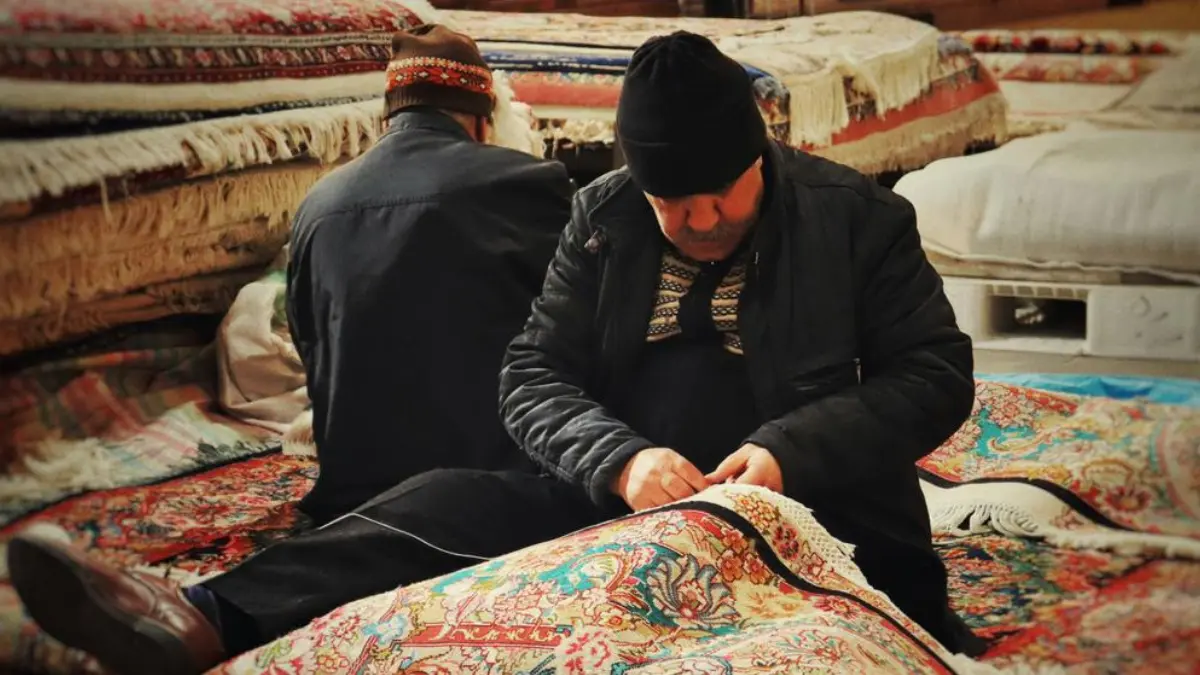
- Skilled craftsmanship
- Cultural and historical continuity
When these elements are sacrificed to chase lower prices, the product loses its core differentiation—and its reason to exist.
Returning to Proven, Century-Old Principles
Industry experts argue that sustainability lies not in volume, but in reclaiming foundational principles that defined Iranian carpets for generations:
- Selection of high-quality wool
- Consistent use of natural dyes
- Professional, region-specific design
- Artistic weaving over purely commercial output
Historically, Iranian carpet production functioned as a coordinated ecosystem of designers, dyers, weavers, and raw-material specialists. Economic pressure has fragmented that system—with visible consequences.
The Missing Link: Certification and Traceability
One of the industry’s most urgent needs is a comprehensive certification and traceability system. A credible identity framework should document:
- Place of weaving
- Design origin
- Fiber and dye composition
- Knot structure and density
- Weaving duration and technique
Without transparent verification, distinguishing authentic Iranian carpets from imitations becomes increasingly difficult—both domestically and internationally. While limited certification efforts exist, they lack scale, enforcement, and institutional backing.
Without investment and policy support, mislabeling will continue to undermine value across the market.
Export Collapse Reflects a Deeper Structural Crisis
The consequences extend far beyond Iran’s borders.
Iranian handwoven carpet exports have fallen from approximately $2 billion annually to around $50 million. This decline has not only weakened Iran’s global standing—it has disrupted the broader handwoven carpet ecosystem.
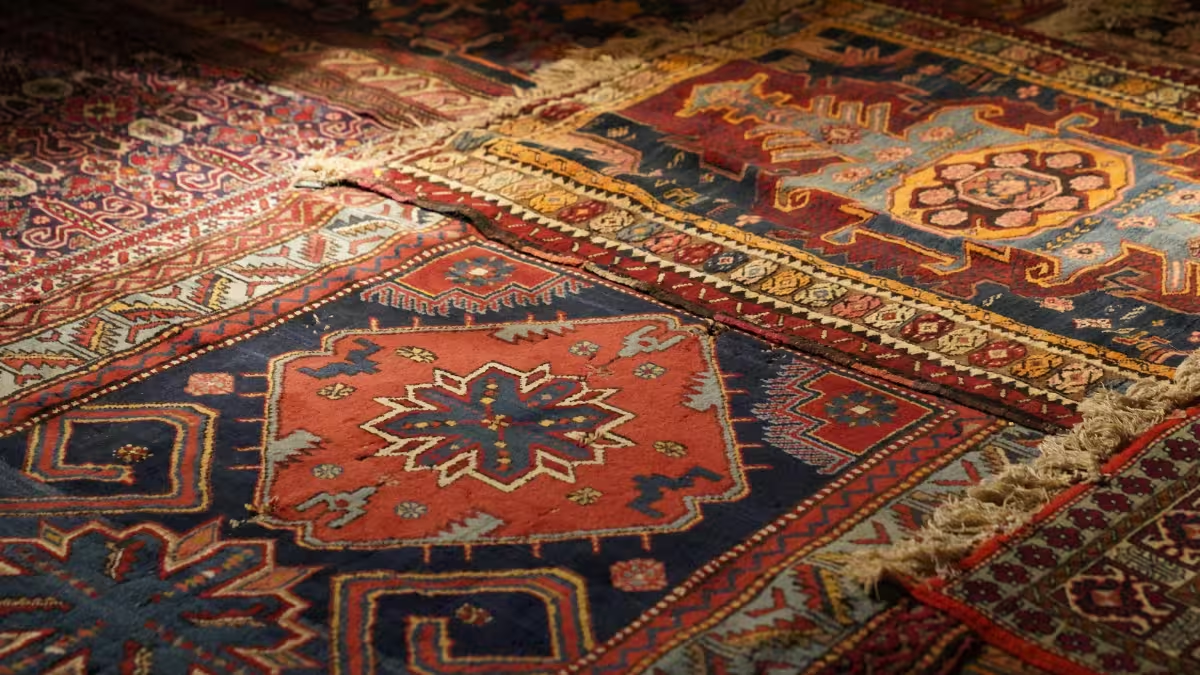
For decades, Iranian carpets set international benchmarks. Their absence has created space for standardized, limited-design alternatives from other producing countries. Ironically, Iran’s once-great strength—extraordinary regional design diversity—has become a disadvantage in a global market that increasingly favors uniformity and scalability.
Final Outlook: A Strategic Choice for the Industry
Iran’s handwoven carpet sector stands at a crossroads. It can continue down a path of price-driven compromise—gradually losing relevance and identity—or it can reposition around authenticity, certification, and cultural value, even if that means serving smaller but more sustainable markets.
Pressure from Afghan carpets and machine-made rugs is real. But the deeper challenge is internal: redefining what Iranian handwoven carpets represent in a global market that increasingly values transparency, provenance, and trust.
If that reset does not happen, the world may not reject Iranian carpets outright—it may simply stop recognizing them.

