




By: Behnam Ghasmei
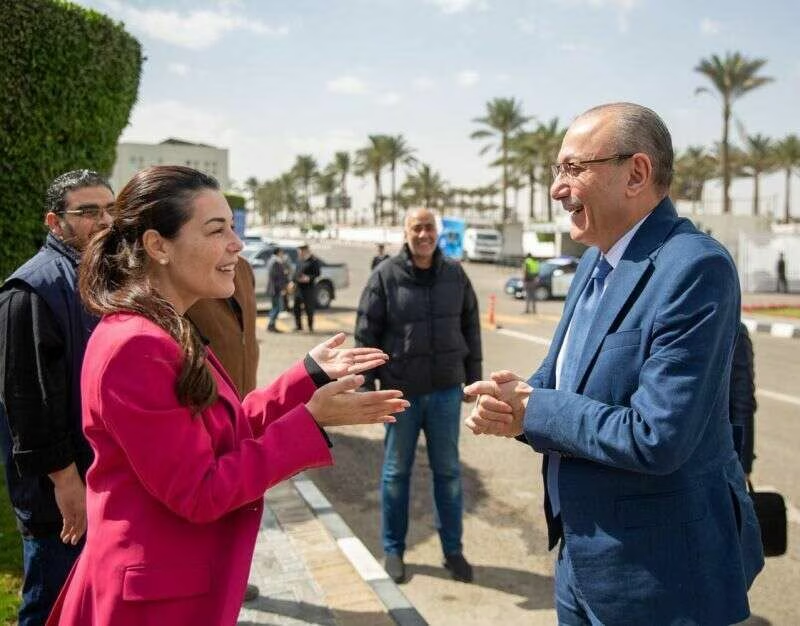
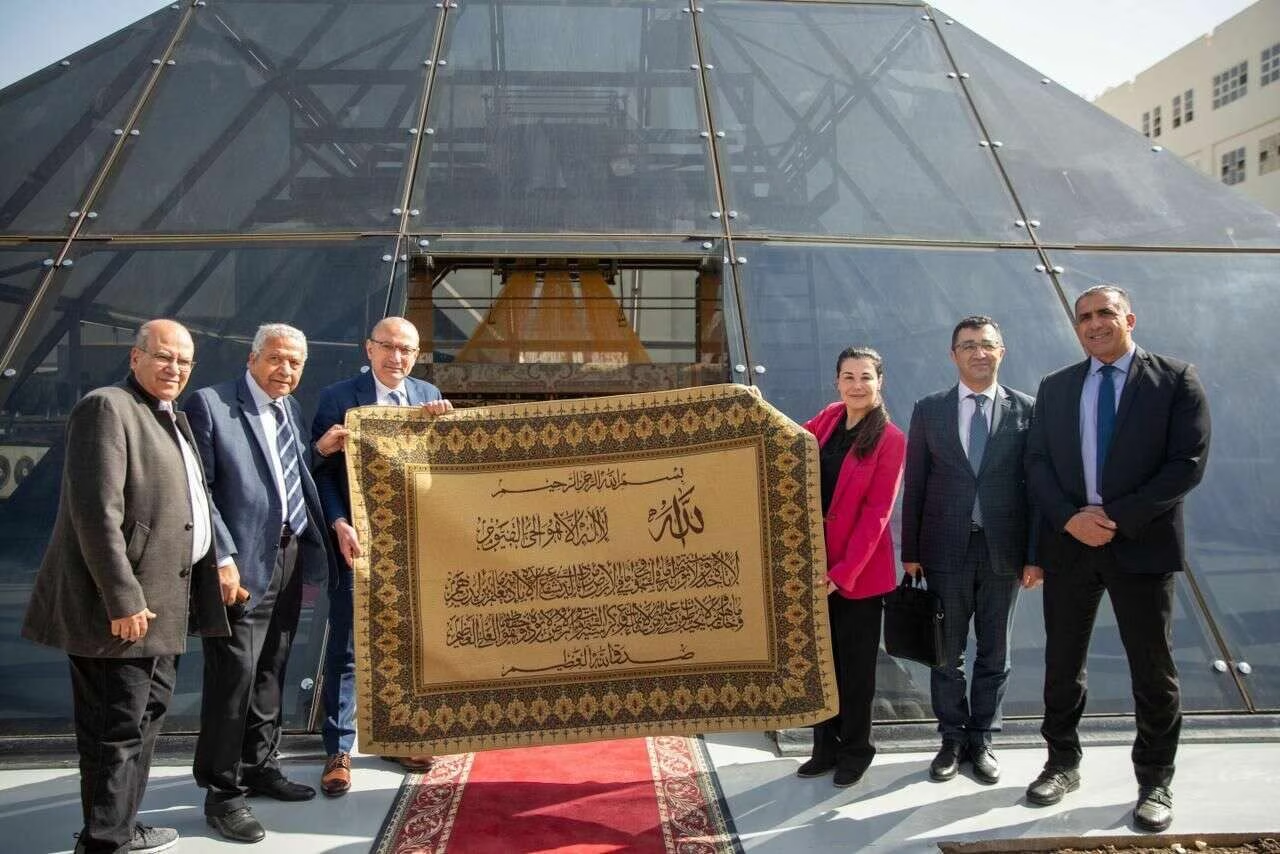
In a move aimed at strengthening international trade and industrial collaboration, Oriental Weavers welcomed Salih Mutlu Şen, Ambassador of the Republic of Türkiye to Egypt, to its headquarters in 10th of Ramadan City.
Strengthening Egypt–Türkiye Industrial Cooperation in Carpet Manufacturing
During the visit, Ambassador Şen toured the company’s manufacturing facilities and held discussions with Oriental Weavers’ Chair, Ms. Yasmine Khamis, along with members of the leadership team. Talks focused on expanding industrial cooperation and identifying opportunities to enhance bilateral trade between Egypt and Türkiye.
Company representatives highlighted the potential for combining Oriental Weavers’ global manufacturing capabilities and scale with Türkiye’s advanced technologies and operational strengths to unlock new avenues for growth and customer-focused solutions.
The visit reflects a shared interest in fostering partnerships built on innovation, operational efficiency, and sustainable development, with the goal of creating long-term value across international markets.
Also Read: Oriental Weavers and Gemini Africa Champion Textile Innovation Through “Weavers of Tomorrow”
Is Turkish Carpet Production Moving Abroad?
At MENA Covering, we see this high-level diplomatic engagement as potentially more than a courtesy visit. It may signal a broader strategic recalibration within the regional carpet industry. Over the past year, hundreds of Turkish companies in textiles and apparel have relocated part of their production outside Türkiye—primarily to Egypt—driven by cost pressures, currency volatility, financing constraints, and the search for export competitiveness. While some of these moves have opened new growth corridors, others remain exposed to macroeconomic uncertainty and shifting global demand. Against this backdrop, the Oriental Weavers–Türkiye dialogue could be interpreted as an early indicator that similar cross-border industrial positioning may gradually extend into the machine-made carpet segment as well.
Egypt offers structural advantages that are increasingly attractive: competitive labor costs, preferential trade access to African, European, and Arab markets, and an expanding industrial base in flooring and home textiles. If supported by technology partnerships, capital investment, and long-term policy alignment, Egypt could emerge not only as a production extension for Turkish carpet manufacturers but also as a strategic export platform. The key question now is whether this visit marks the beginning of a new phase of Turkish outward industrial investment in machine-made carpets—or simply a strengthening of bilateral trade without structural relocation.
:: What is your view on this development? Can Egypt attract meaningful Turkish investment in machine-made carpets and position itself as a growth hub for Turkish exports? Share your perspective in the comments—selected insights may be featured in our upcoming analysis.

