




Introduction: Why Fiber Matters in Carpet Manufacturing
Machine-made carpets are more than just decorative pieces—they are essential elements of modern interior design that contribute to both comfort and ambiance. Yet one of the most critical factors influencing the quality and cost of these carpets is often overlooked: the type of fiber used in their construction.
Thanks to innovations in textile technology, manufacturers now have access to a wide variety of natural and synthetic fibers, each offering unique advantages in terms of appearance, durability, and pricing. In this article, we explore how the choice of fiber directly impacts the performance, aesthetics, and value of machine-made carpets.
Types of Carpet Fibers and Their Characteristics
✅ Natural Fibers: Premium Feel and Long-Lasting Quality
Natural fibers like wool and silk have a long-standing history in carpet weaving. Known for their softness, elegance, and resilience, these materials offer superior comfort and extended lifespan.
Key benefits of natural fibers:
- Luxurious texture and feel
- High durability and resistance to wear
- Ideal for vintage and classic-style carpets
Environmentally friendly and biodegradable
Natural fiber carpets are typically used in formal settings or spaces with lower foot traffic, making them a top choice for high-end interior design.
✅ Synthetic Fibers: Affordable and Functional
Synthetic materials such as polypropylene, nylon, polyester, and acrylic have become popular alternatives due to their lower cost, stain resistance, and practicality.
Advantages of synthetic fibers:
- Budget-friendly pricing
- Excellent stain and moisture resistance
- Easy maintenance and cleaning
- Suitable for high-traffic areas like living rooms, hallways, and offices
These fibers are engineered to withstand everyday use, making them ideal for busy households and commercial environments.
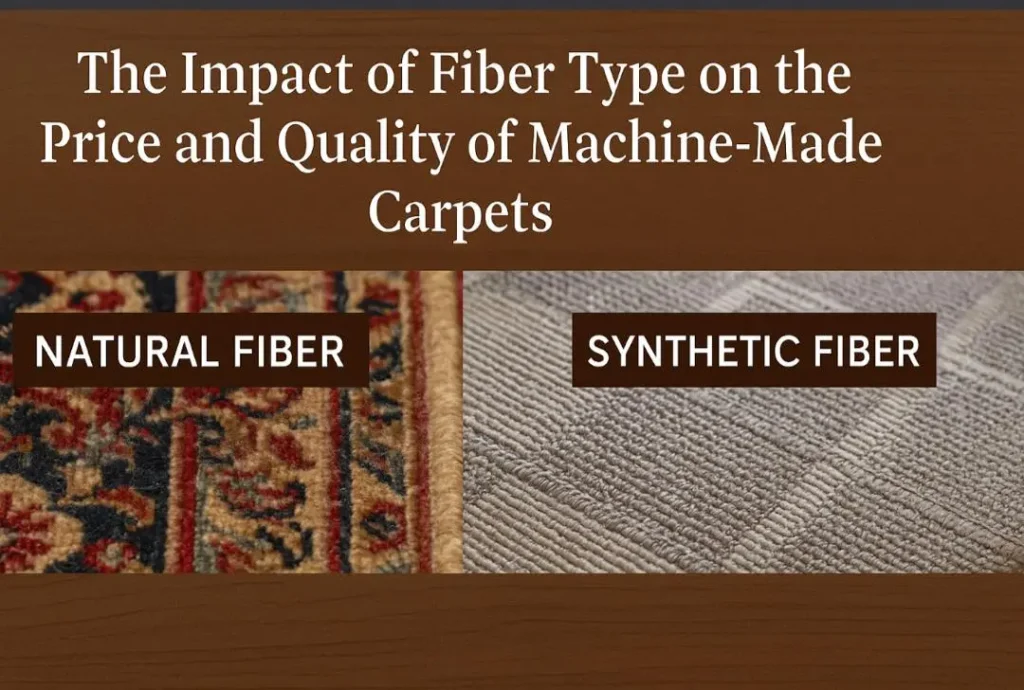
Visual comparison between natural fiber (left) and synthetic fiber (right) machine-made carpets.
How Fiber Type Influences Carpet Price
The fiber composition of a carpet is one of the primary factors that determines its final price. Natural fibers, due to their sourcing and processing complexity, result in higher production costs and thus a more expensive product. On the other hand, synthetic fibers benefit from mass production and industrial scalability, allowing for more cost-effective pricing.
Cost Comparison:
- Wool carpets = Higher price range
- Polypropylene or nylon carpets = Lower to mid-range prices
Understanding this price-quality relationship helps buyers align their purchase with their budget and expectations.
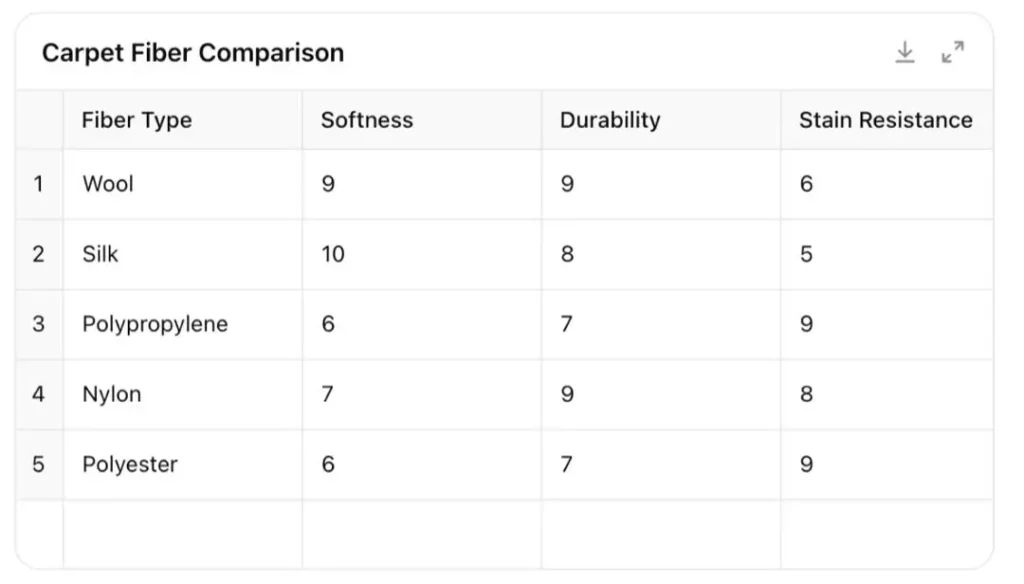
Durability and Long-Term Performance
Natural Fiber Carpets:
- Longer lifespan with proper care
- Better resilience to compression and traffic
- Retain appearance and softness over time
Synthetic Fiber Carpets:
- Greater resistance to moisture and stains
- Easy to maintain and clean
- Slightly less durable over many years, but ideal for functional use
Depending on your usage pattern and room type, both options can be valuable—each serving a distinct purpose in flooring design.
How to Choose the Right Carpet Fiber (Practical Tips)
| Room Type | Recommended Fiber Type | Reason |
| Living Room | Polypropylene or nylon | High resistance to traffic and stains |
| Bedroom | Wool or silk | Softness and comfort |
| Hallways & Entryways | Polypropylene or nylon | Easy to clean and durable |
| Formal Spaces | Acrylic or wool blend | Classy appearance with good wear resistance |
Final Thoughts
The type of fiber used in machine-made carpets plays a defining role in determining their aesthetic quality, functional performance, and overall value. Natural fibers like wool and silk offer timeless elegance and longevity but come at a premium price. Synthetic fibers, on the other hand, provide affordable and durable solutions ideal for everyday living.
By understanding the strengths and trade-offs of each material, consumers can make informed decisions and choose carpets that best suit their style, space, and spending plan.

