




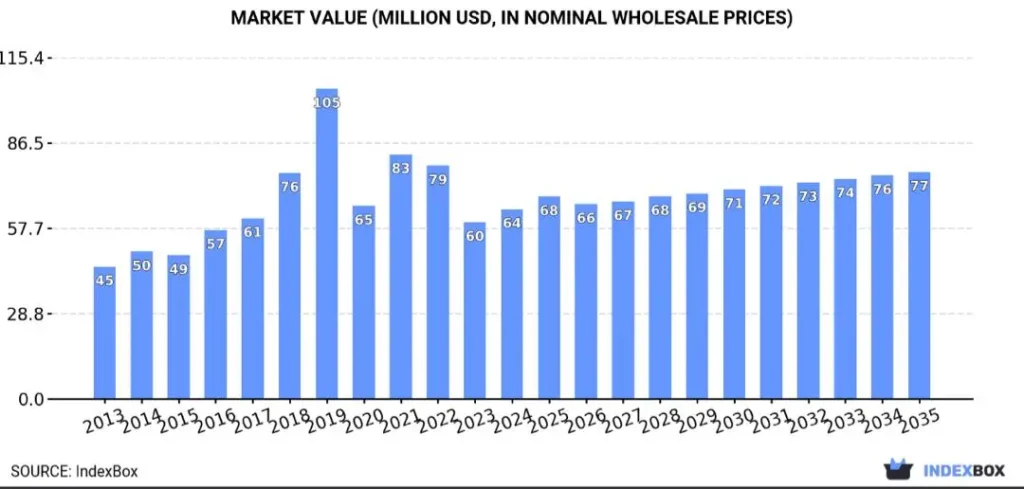
Africa’s jute and jute-like fibers market is experiencing a resurgence, with consumption rising by 7.8% to reach $64 million in 2024, following two years of decline. According to a recent IndexBox report, the market is projected to expand further, reaching 81,000 tons in volume and $77 million in value by 2035, driven by a compound annual growth rate (CAGR) of 1.4% in volume and 1.6% in value.
Kenya, Tanzania, and the Democratic Republic of the Congo are leading producers, collectively accounting for 76% of Africa’s total jute output. Tanzania stands out as the continent’s top exporter, followed by Kenya and Egypt. On the import side, Nigeria leads, representing 53% of total imports, with Tunisia and Côte d’Ivoire also being significant importers.
This growth presents substantial opportunities for the carpet and flooring industry, particularly in the production of jute-based rugs and carpets. Jute’s natural texture, durability, and eco-friendly properties make it an attractive material for sustainable flooring solutions. As consumer demand for environmentally responsible products increases, jute’s biodegradability and renewable nature position it as a viable alternative to synthetic fibers.
The rising interest in jute aligns with global trends favoring sustainable materials in home décor and construction.
Manufacturers and designers are increasingly incorporating jute into their product lines, offering consumers stylish and eco-conscious flooring options. With Africa’s jute market on the upswing, stakeholders in the carpet and flooring sector have a timely opportunity to invest in and promote jute-based products.

