




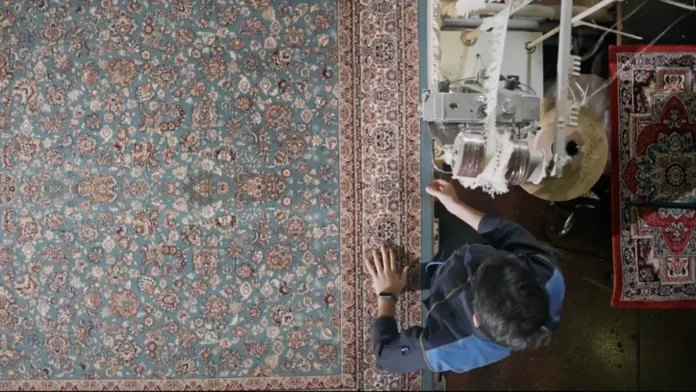
The President of the Tehran Chamber of Commerce, Industries, Mines and Agriculture has identified Afghanistan, China, and Turkey as emerging competitors in the global carpet market, posing new challenges for Iranian handmade carpet exports.
Speaking at the National Day of Iranian Handmade Carpet, Mahmoud Najafi Arab said that over the past few decades, Iran’s economy has been heavily impacted by sanctions, which have significantly harmed the country’s carpet exports. “The international community, under various pretexts, has remained silent in the face of sanctions targeting Iranian carpet exports,” he added.
Najafi Arab emphasized the deep cultural and historical significance of Iranian carpet weaving, noting that many traditional arts have faded over time due to the loss of master artisans, but carpet weaving has managed to survive and remain strong. “This industry is a living expression of Iran’s cultural identity,” he stated.
Quoting the late Iranian economist Mir Mostafa Alinassab, Najafi Arab recalled: “Iranian carpet weavers work in cramped, dimly lit basements, enduring hardship, yet their perseverance has brought life and livelihood to their families.”
He stressed that while Iranian carpet weaving is rooted in artistry, it has yet to fully transform into a robust industry, and conditions for artisans remain inadequate. “Our economic community still sees carpet weavers as mere laborers rather than artists,” he said, adding that in countries like Japan and China, artists hold the highest levels of respect and their cultural industries are highly valued.
Referring to Iranian cinema, Najafi Arab highlighted a symbolic scene from Ali Hatami’s film Kamal-ol-Molk, which presents the carpet as an emblem of national culture and art. “In Iran, carpets must be recognized and respected for what they truly represent — a cultural treasure. Exporting carpets is, in essence, exporting Iranian culture to the world.”
On the revival of carpet exports, he noted that countries such as the United States, Japan, and the Czech Republic use their cultural and artistic products to convey messages globally, while Iran’s economy has suffered under sanctions and competition from other nations.
Najafi Arab underscored that celebrating the National Day of the Iranian Handmade Carpet should be a joint effort between the government and the private sector to showcase Iran’s rich cultural heritage to the world, positioning the country as a promoter of peace and unity.
“Iranian carpets symbolize peace, prosperity, and global harmony, reflecting the nation’s historical mission to unite different ethnicities and religions,” he said. “The craftsmanship of Iranian men and women in weaving carpets sends a message of peace, development, and well-being, serving as both a cultural and economic ambassador for Iran.”
He expressed hope that in the near future, Iranian carpets will continue to be recognized worldwide as a cultural and economic symbol of the nation — preserving their authenticity and enduring legacy for generations to come.

