




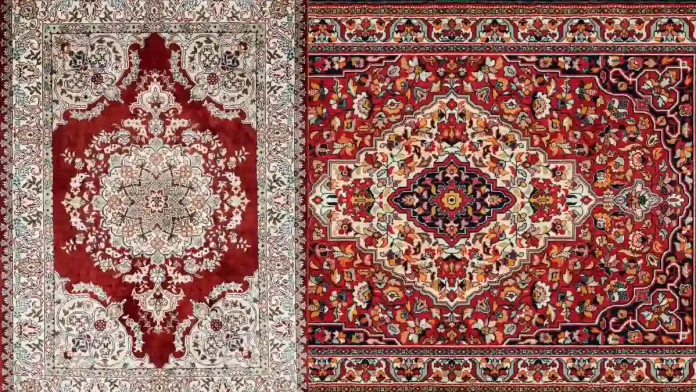
India’s handmade rug story begins far from showrooms and design fairs—in the weaving clusters where looms have been central to daily life for generations. For decades, India has been one of the world’s leading producers of handwoven carpets, supplying homes, hotels and commercial spaces across Europe, the US, and the Middle East. But today, the global perception of these rugs is shifting dramatically.
Long viewed as functional décor, Indian handmade rugs are now emerging as collectible luxury pieces, driven by a worldwide move toward authenticity, craftsmanship, and conscious living.
A Global Shift Toward Authenticity and Human Craft
In an era dominated by automation and mass production, objects that reveal the imprint of human hands are gaining new appreciation. For international buyers—especially in premium markets—the appeal lies in uniqueness rather than uniformity.
While machines can produce thousands of identical rugs in days, they cannot replicate the subtle irregularities, textured narratives, and quiet character of a handwoven piece. Interior designers increasingly curate these rugs as statement anchors for modern spaces, valuing their warmth, individuality, and story-rich designs.
Sustainability and “Slow Luxury” Drive Market Momentum
A rising emphasis on ethical and sustainable consumption is reinforcing the handmade rug’s place in the luxury segment. Many Indian manufacturers are adopting natural fibres, plant-based dyes, and low-impact techniques, reducing environmental impact and aligning with the global movement toward “slow luxury”—high-quality items made with care, built to last.
The labour-intensive process behind each rug, once seen as a constraint, has become a core selling point.
Also Read: 47th India Carpet Expo Concludes with Record Participation and Business Success
Bhadohi Leads India’s Modern Renaissance in Rug Design
This transformation is most visible in Bhadohi, often called “The Carpet City of India.” Generations of weavers here continue to work in courtyards, village homes and small workshops, but the design language has evolved.
Exporters and young entrepreneurs are reinterpreting traditional weaving for modern tastes. They are experimenting with minimalist palettes, contemporary textures and bold, abstract compositions designed to appeal to global décor trends. Collaborations with international designers and luxury brands are bringing Bhadohi’s craftsmanship to high-end stores from New York to Tokyo.
Customization has become a key differentiator. As Mohammad Ameen, founder of Bhadohirug, notes, modern luxury buyers increasingly value personalized pieces. Clients can now specify exact size, color and motifs, which weavers translate knot by knot into bespoke creations—an ability machine-made carpets cannot match.
India’s Competitive Edge: A Deep Reservoir of Skilled Weavers
India’s greatest strength lies in its vast pool of skilled artisans, many trained through family traditions over decades. This human capital is difficult for other carpet-producing nations to replicate quickly, giving India a strong competitive edge as global demand shifts toward handcrafted, ethical décor.
Regional diversity adds further value: Rajasthan’s bold geometrics, Kashmir’s intricate florals, and Bhadohi’s contemporary textures together form a rich tapestry of design languages.
Challenges and the Push Toward Responsible Luxury
Despite the momentum, the industry faces challenges. To sustain its growth, India must continue addressing issues related to fair wages, safe working conditions, and the elimination of exploitative practices. International buyers are increasingly vigilant about ethical supply chains, and any discrepancy between branding and reality could damage credibility.
However, this scrutiny is pushing producers toward higher standards, certification systems, and transparency—improvements that ultimately strengthen India’s position as a source of responsible, high-end craftsmanship.
Digital Visibility Reshapes Global Reach
E-commerce, social media and immersive digital tools are allowing Indian rug brands to showcase their collections directly to global consumers. High-resolution visuals, artisan stories, and virtual room views help bridge the gap between weaver communities and end buyers. This digital shift reduces dependence on intermediaries and enables brands to build strong identities centred on heritage, authenticity and sustainability.
A Quiet Revival of Luxury
What makes India’s handmade rugs compelling is not only their beauty, but their blend of tradition and reinvention. A craft once confined to export warehouses is now in the spotlight of global luxury décor. From Bhadohi’s looms to homes across the world, each rug carries the same message: in a fast-mechanising world, the value of patient, skilled human craftsmanship is not fading—it is becoming the true definition of modern luxury.

