




For years, Iran’s machine-made carpet industry has been presented as one of the country’s most successful export-oriented sectors. Industry statements often highlight strong foreign exchange earnings, a positive trade balance, and a key role in non-oil exports.
However, a closer look at the numbers raises an important question:
Is Iran’s machine-made carpet sector truly strong and competitive—or has it simply grown larger in nominal terms due to inflation and currency depreciation?
Answering this requires moving beyond promotional narratives and examining the industry through the lens of economic fundamentals.
Stable Dollar Exports in a Decade of Currency Collapse
According to industry associations and publicly available data, Iran’s machine-made carpet exports have averaged roughly USD 280–350 million per year over the past decade. While there have been annual fluctuations, there is no clear long-term upward trend in dollar terms.
This is particularly striking when placed in context. Over the same period, the Iranian rial has lost more than 95 percent of its value, and production costs—including labor, energy, logistics, and financing—have risen sharply.
From an economic perspective, an export industry that fails to expand its dollar revenues during such a dramatic currency devaluation is not demonstrating strength; rather, it is revealing structural growth constraints.
When Currency Devaluation Fails to Boost Exports
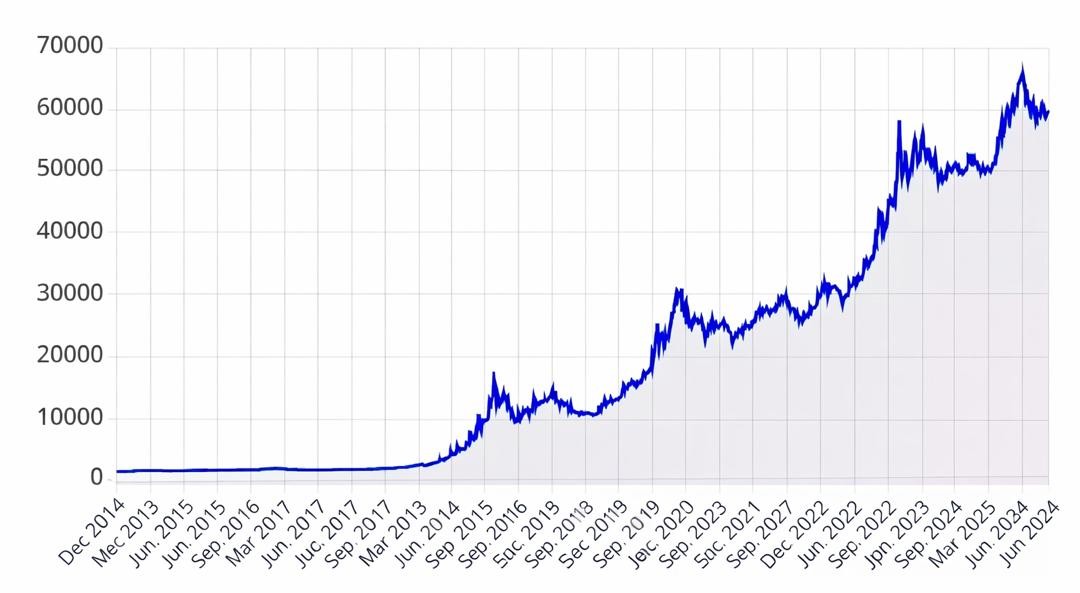
Classical and modern trade theory suggest that a weaker domestic currency should stimulate exports by improving price competitiveness. In Iran’s case, however, the sharp depreciation of the rial has not translated into a significant increase in machine-made carpet exports.
Despite lower dollar prices:
- New export markets have not been meaningfully expanded.
- Iran’s global market share has remained largely unchanged.
- Value-added branding and product differentiation remain limited.
Economists describe this phenomenon as an export ceiling—a situation in which price competitiveness alone cannot drive growth because non-price factors such as branding, design innovation, technology, and distribution networks are underdeveloped.
Import Dependency and the Question of Net Export Value
Another under-discussed reality is the industry’s reliance on imported inputs. Official statements indicate that Iran’s machine-made carpet sector annually imports approximately USD 70–100 million worth of raw materials and equipment, including acrylic fibers, jute, dyes, chemicals, machinery, and spare parts.
This means that a significant portion of export revenues merely offsets prior import costs. From an economic standpoint, the relevant metric is not gross exports, but net export value—the true value added generated domestically.
When this adjustment is made, the industry’s net foreign exchange contribution is considerably smaller than headline figures suggest.
Positive Trade Balance: A Partial Picture
Industry representatives frequently emphasize the sector’s positive trade balance, pointing out that exports exceed imports. While this is technically correct, it does not capture the full economic reality.
Costs often excluded from these calculations include machinery depreciation, international marketing expenses, logistics, exhibition participation, currency repatriation risks, and declining real profit margins. A positive trade balance alone does not guarantee long-term competitiveness or sustainability.
In economic terms, trade balance is a necessary indicator—but not a sufficient one.
Export Concentration and Limited Industrial Diffusion
Another structural issue is export concentration. Iran’s machine-made carpet exports are dominated by an estimated 30 to 40 large companies, which account for the majority of international sales and exhibition participation.
Industry estimates suggest that nearly USD 6–7 million annually (equivalent to around IRR 300 billion) is spent on international exhibitions—largely by the same group of firms. This has resulted in company-centric growth rather than system-wide industrial development, limiting opportunities for smaller and mid-sized producers.
Nominal Growth vs. Real Development
One of the most common analytical errors surrounding Iran’s machine-made carpet industry is confusing nominal growth with real growth.
Export values in local currency have increased dramatically, but dollar-denominated exports have remained largely flat. Global brand recognition has not significantly improved, and penetration into new markets has been modest at best.
From a development economics perspective, industries that grow primarily due to inflation are not genuinely expanding—they are simply becoming more expensive.
Conclusion: Alive, but Not Mature
Iran’s machine-made carpet industry is not a failing sector. It remains active, employs thousands, and generates foreign exchange. However, it cannot yet be described as a mature, globally competitive industry.
Its apparent size is driven more by inflation and currency depreciation than by innovation, market expansion, or productivity gains.
Final Assessment
Iran’s machine-made carpet sector is an industry “grown by inflation,” not one “grown by development.”
For the industry to achieve genuine strength, future progress must come from international branding, technological upgrading, reduced import dependency, and broader export participation—not from nominal growth amplified by macroeconomic instability.

