




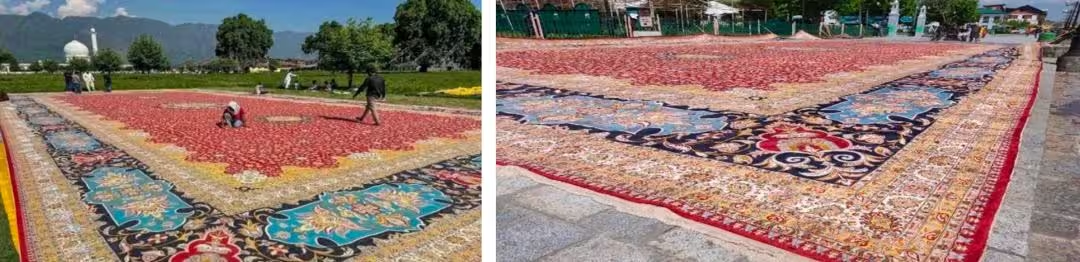
In an era dominated by industrial production and speed, certain projects in the world of carpets and floor coverings stand apart—not as commercial products, but as cultural statements. One such project is the monumental hand-knotted carpet recently presented by SFS Enterprises in Kashmir, a work that has drawn attention for its exceptional scale, craftsmanship, and cultural depth.
According to the information shared, the carpet has been produced entirely by hand using traditional Kashmiri techniques, with artisans working knot by knot over an extended period of time. The project is rooted in the centuries-old weaving culture of Kashmir, where carpet making is not merely a profession but a form of collective memory, identity, and inherited knowledge.
What distinguishes this work is not only its physical size, but the human coordination and discipline required to bring it to life. The carpet was reportedly woven on a custom-built oversized wooden loom, designed specifically for this project, and executed by a synchronized team of master artisans led by experienced weavers from Srinagar.
Such undertakings demand years of continuous effort, technical precision, and an extraordinary level of collective commitment—qualities that are increasingly rare in today’s textile landscape.
Beyond its technical execution, the project carries a strong cultural and social dimension. The use of traditional Talim script, natural dyes, and heritage materials reflects an effort to preserve endangered weaving knowledge that is under pressure from mechanization and declining artisan communities. At the same time, the project has reportedly supported multiple artisan families over several years, providing sustained livelihoods and reinforcing the social fabric of Kashmiri craft clusters.
From an editorial perspective, works of this nature function as more than luxury artifacts. They act as living representations of intangible cultural heritage, demonstrating how large-scale craftsmanship can still exist within a contemporary global market. For regions such as the Middle East and North Africa—where appreciation for handmade carpets, cultural authenticity, and artisanal value remains strong—such projects resonate well beyond their place of origin.
Also Read: Pakistan to Host 41st International Exhibition of Hand-Knotted Carpets in October 2025
A Note on the “Largest” Claim
In the presentation of this carpet, it has been described as one of the largest hand-knotted works of its kind in Asia. While this characterization highlights the impressive ambition behind the project, it is worth noting that claims of being the “largest” in the carpet industry often require clear, standardized benchmarks and comparative documentation. At this stage, no publicly available technical records or third-party references have been shared to formally substantiate this designation on a global or continental level.
That said, the absence of formal certification does not diminish the artistic or cultural value of the work itself. In the handmade carpet sector, many exceptional projects across different countries have been described using similar superlatives, often reflecting pride in craftsmanship rather than strict technical classification.
Editorial Conclusion
Regardless of terminology, the Kashmiri hand-knotted carpet produced by SFS Enterprises represents a remarkable artistic and human achievement. It stands as a reminder that, even in an age of automation, large-scale handmade production remains possible when tradition, skill, and long-term vision come together.
MENA Covering views this project as a valuable contribution to the global narrative of handmade carpets—one that celebrates patience, heritage, and the enduring relevance of human craftsmanship. The artisans and producers behind this work deserve recognition for sustaining a demanding tradition and translating it into a contemporary statement of cultural resilience.

