




In today’s carpet and flooring industry, the conversation is no longer about individual machines. It is about systems—integrated, intelligent, and efficient.
Sellers Textile Engineers is clearly aligning itself with this shift. Rather than positioning its offering as a collection of standalone technologies, the company is presenting a structured ecosystem built around coating, drying, and finishing.
This distinction matters. Manufacturers are no longer buying equipment; they are investing in production logic.
Coating Technology as the Core of Value Creation
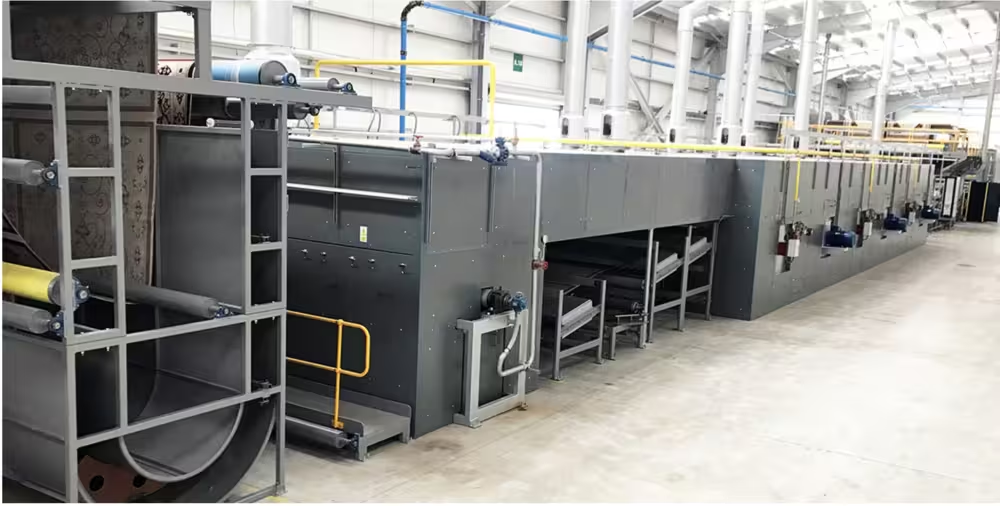
At the center of Sellers’ portfolio lies its coating expertise. Whether for bitumen, PVC, or polyurethane applications, the company’s systems are designed to operate as continuous, in-line solutions.
What stands out is not just the ability to coat—but the ability to control the process with precision.
Temperature regulation, conveyor tension, and application accuracy are all engineered to work together. The result is a production environment where variability is minimized and consistency becomes predictable.
In a market where product quality directly affects brand positioning, this level of control is no longer optional.
Automation Begins at the Mixing Stage
One of the more overlooked—but critical—areas in carpet production is latex preparation. Sellers addresses this with automated mixing systems that bring a higher level of accuracy to the very beginning of the process.
Instead of relying on manual adjustments, the system operates through PLC-controlled dosing, monitored flow, and stored recipes. This ensures repeatability across batches—something that becomes increasingly important for large-scale manufacturers.
It is a reminder that quality is not created at the end of the line. It starts at the beginning.
Rethinking Efficiency in Carpet Backing
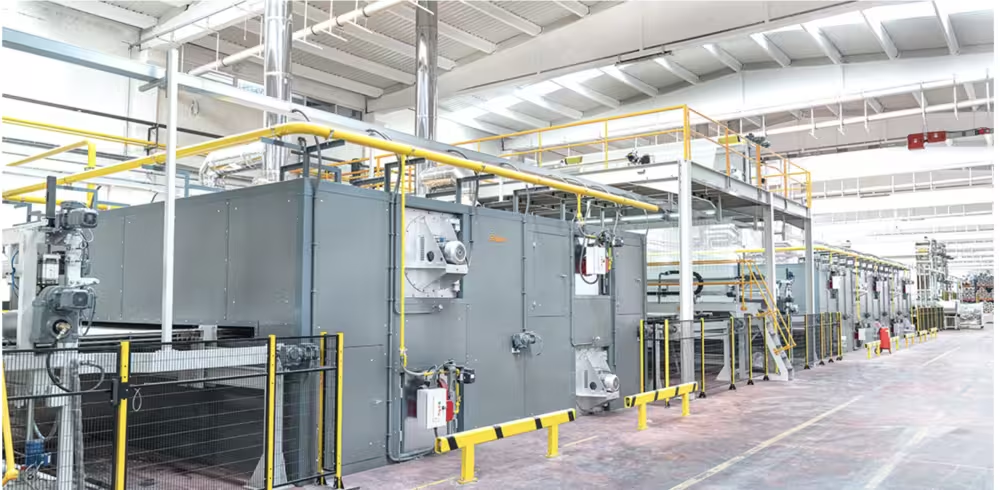
The company’s move into powder coating and laminating technologies signals a broader shift in how manufacturers approach efficiency.
Compared to traditional latex systems, powder-based solutions offer a cleaner process, reduced energy consumption, and a smaller production footprint. At the same time, they deliver improved flexibility in the final product—particularly relevant for automotive carpets and high-performance applications.
This is not just a technological upgrade. It is a response to rising energy costs and sustainability pressures.
Beyond Carpets: Expanding into Artificial Grass and Technical Applications
Sellers’ systems are not limited to traditional carpet manufacturing. The company is also addressing the growing demand for artificial grass, a segment that continues to expand across residential, sports, and commercial applications.
Here again, the focus is on control. From tension management to drying precision, the systems are designed to ensure stability across different materials and product formats.
At the same time, the inclusion of needlepunched processing capabilities opens the door to technical textiles—where durability, consistency, and performance are critical.
High-Capacity Production for Premium Segments
In the woven carpet segment, particularly for Axminster and Wilton constructions, Sellers is targeting high-capacity production environments.
The ability to handle carpets with extremely high point density while maintaining finishing quality is a clear indication of where the company sees value: not in volume alone, but in premium output.
Read more: Sellers Textile Engineers Highlights Sustainable Carpet Finishing Innovations at Singapore
This aligns with a broader industry trend where margins are increasingly found in high-end, differentiated products rather than mass production.
Editorial Insight: Where the Market Is Heading
What Sellers is presenting is not just a product range—it is a direction.
The textile and flooring industries are moving toward:
- fewer machines, more integration
- less manual intervention, more automation
- lower energy consumption, higher efficiency
Manufacturers who continue to invest in fragmented systems may find themselves at a disadvantage. The future belongs to those who can build intelligent production environments.
Conclusion: Engineering the Next Phase of Carpet Manufacturing
Sellers Textile Engineers is positioning itself as more than a machinery supplier. It is aiming to become a systems partner in an industry that is rapidly evolving.
For manufacturers across MENA and beyond, the implication is clear:
The competitiveness of tomorrow’s carpet industry will not depend solely on raw materials or labor costs—but on how intelligently production lines are designed and operated.

