




An Editorial by MENA Covering
Introduction: The Invisible Architects of the Carpet Industry
When people talk about the global machine-made carpet industry, the conversation usually revolves around weaving machines, yarn technologies, export volumes, and manufacturing capacity. Yet behind every successful carpet collection lies another force that is often overlooked: the designer.
In today’s highly competitive flooring market, carpet manufacturing is no longer driven solely by production power. Design has become one of the most strategic elements influencing commercial success, brand positioning, and international competitiveness.
From color harmony and texture composition to cultural adaptation and consumer psychology, carpet designers now play a critical role in shaping the products that ultimately reach global markets.
Despite this growing importance, the realities faced by designers inside the machine-made carpet industry remain largely hidden from public attention.
The Transformation of Carpet Design in the Modern Era
Traditionally, carpet production relied heavily on classical motifs, regional patterns, and repetitive collections that changed slowly over time. Manufacturers could sell the same designs for years with minimal modifications.
That reality has changed dramatically.
Globalization, digital media, changing interior design trends, and fast-moving consumer expectations have accelerated the pace of design cycles across the flooring industry. Buyers now demand:
- faster collection updates
- trend-oriented products
- customized aesthetics
- region-specific color palettes
- modern reinterpretations of traditional motifs
As a result, carpet design has evolved from a secondary decorative process into a highly strategic industrial discipline.
In many companies today, designers directly influence sales performance and export success.
Design Is No Longer Decoration — It Is Market Strategy
One of the biggest misconceptions in the carpet industry is that design is purely artistic.
In reality, successful carpet design sits at the intersection of:
- art
- manufacturing
- market intelligence
- consumer behavior
- production limitations
A carpet designer is expected not only to create visually attractive products, but also to understand:
- weaving limitations
- yarn behavior
- machine capabilities
- texture balance
- production efficiency
- export market preferences
In machine-made carpets, even small design decisions can directly affect manufacturing complexity, production speed, and commercial viability.
This makes the designer one of the most strategically important individuals inside the production chain.
The Rise of Digital Carpet Design
The introduction of specialized design software transformed the role of carpet designers.
Programs such as Texcelle, Photoshop, NedGraphics, and other digital textile platforms enabled designers to create increasingly complex and production-ready carpet layouts.
Today, the design process involves far more than sketching patterns.
Modern carpet designers work with:
- digital color mapping
- texture simulations
- pile effect visualization
- weaving structure adaptation
- production file preparation
- machine compatibility adjustments
This digitalization has accelerated product development cycles significantly.
A collection that once required weeks of manual preparation can now be developed, edited, recolored, and prepared for weaving within days.
The Pressure Behind Creativity
Although the final products may appear luxurious and artistic, the design environment inside many carpet factories is often highly stressful.
Designers frequently operate under:
- intense time pressure
- aggressive sales expectations
- rapid trend changes
- constant collection updates
- commercial limitations
Many companies demand continuous new collections to stay competitive in international markets.
As a result, designers are often expected to produce large numbers of patterns within very short deadlines.
This pressure can reduce creative freedom and shift the focus toward fast commercial adaptation instead of long-term innovation.
Read More: If the War Continues, Iran’s Machine-Made Carpet Industry Will Face a Structural Crisis
The Growing Problem of Design Copying
One of the most serious issues within the machine-made carpet industry is design imitation.
Successful collections are often copied rapidly by competitors, sometimes within weeks of market release. This has created frustration among many professional designers who believe original creativity is not adequately protected.
In highly competitive manufacturing centers such as Gaziantep, where hundreds of companies operate within close proximity, design imitation has become an ongoing industry concern.
The result is a market environment where:
- originality becomes risky
- short-term replication increases
- innovation slows down
- designers lose motivation
For many professionals, the absence of stronger intellectual property protection remains one of the biggest obstacles to creative development in the carpet sector.
Design and Export Success
Perhaps the clearest evidence of the importance of designers can be seen in export markets.
Different global regions demand completely different visual languages.
European consumers often prefer:
- minimalist aesthetics
- soft neutral palettes
- modern geometric layouts
Middle Eastern markets may favor:
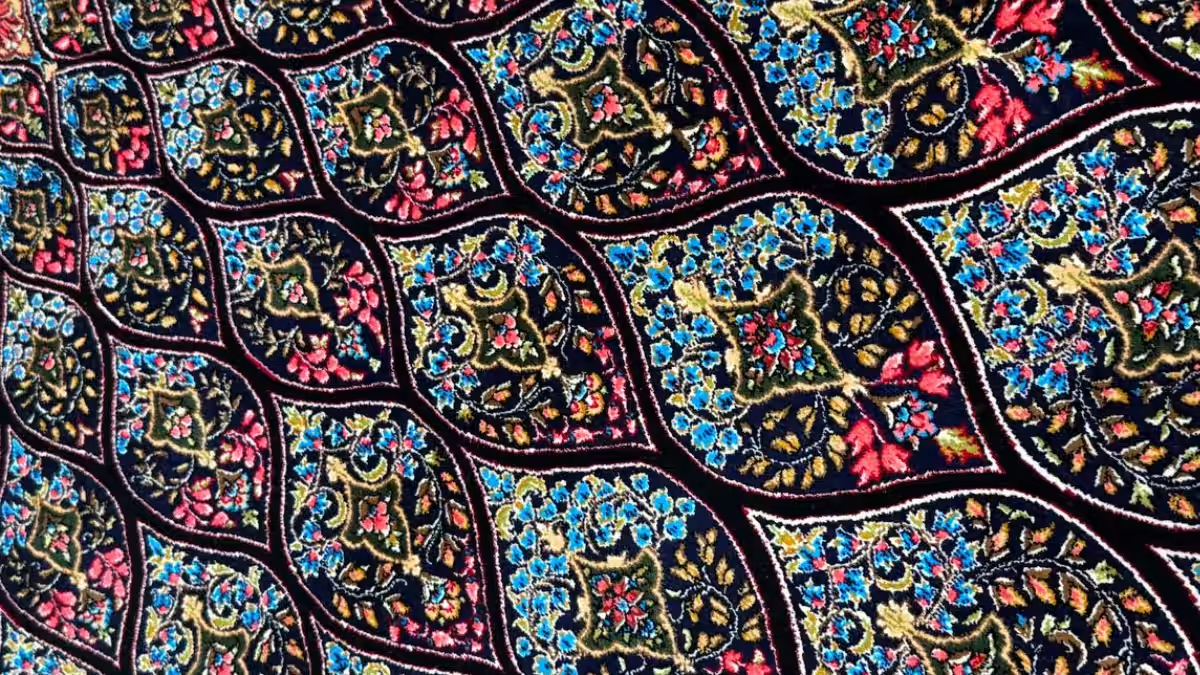
- classical luxury motifs
- high-detail ornamentation
- rich color contrasts
African markets frequently respond positively to:
- bold color combinations
- vibrant textures
- strong visual identity
Designers must therefore function almost like cultural analysts, adapting collections according to regional consumer psychology.
This ability to localize products has become one of the most important competitive advantages for successful carpet exporters.
The Relationship Between Designers and Manufacturers
The connection between management teams and design departments can significantly affect a company’s success.
In companies where designers are treated merely as technical operators, creativity often becomes limited. However, manufacturers that integrate designers into strategic decision-making processes tend to develop stronger and more successful collections.
Forward-thinking companies increasingly understand that design is not a cost center—it is a value creator.
The strongest carpet brands today are usually those that successfully combine:
- manufacturing capability
- strong branding
- professional design teams
- rapid market adaptation
Artificial Intelligence and the Future of Carpet Design
The next transformation in carpet design may come from artificial intelligence.
AI-supported design tools are beginning to influence:
- color forecasting
- pattern generation
- trend prediction
- customer personalization
- digital simulations
While some fear automation could reduce the role of designers, many industry professionals believe AI will instead become a creative support tool rather than a replacement.
Human creativity, cultural understanding, and emotional interpretation remain difficult to replicate entirely through algorithms.
However, designers who fail to adapt to digital technologies may struggle in the future marketplace.
Education and the Industry Gap
Another challenge facing the sector is the disconnect between education systems and industrial realities.
Many young graduates entering textile and carpet design programs possess theoretical artistic knowledge but limited understanding of industrial production processes.
Manufacturers often need to retrain designers internally to help them understand:
- machine limitations
- yarn systems
- production feasibility
- export-oriented design strategies
This gap highlights the need for stronger cooperation between universities and the carpet industry.
Why Designers Will Shape the Future of the Carpet Industry
As machine-made carpet production becomes increasingly globalized, competitive advantage is shifting away from simple manufacturing volume.
Technology is becoming more accessible worldwide. Machinery can be purchased by many competitors. Production systems are increasingly standardized.
Design, however, remains one of the few areas capable of creating long-term differentiation.
The companies that will dominate the future carpet industry are unlikely to be those producing the largest volumes alone. Instead, they will be the companies capable of combining:
- technology
- speed
- branding
- originality
- and strong design intelligence
Conclusion
Behind every successful machine-made carpet collection stands a designer whose influence extends far beyond aesthetics.
Today’s carpet designers are not simply artists—they are strategic contributors to export growth, brand identity, product innovation, and market adaptation.
As the industry evolves toward faster production cycles, digitalization, and increasing customization, the role of designers will only become more important.
The future of the carpet industry may ultimately depend not only on who owns the biggest machines, but on who understands design the best.
Editor’s Comment – Behnam Ghasemi, Editor-in-Chief of MENA Covering
“In our view, one of the most underestimated realities of the global carpet industry is the true value of designers. Machinery can be purchased, raw materials can be sourced, and production lines can be expanded—but original design thinking remains far more difficult to replicate. The future of machine-made carpets will increasingly belong to companies capable of building strong creative teams and transforming design into a strategic business advantage rather than simply a decorative function.”

